
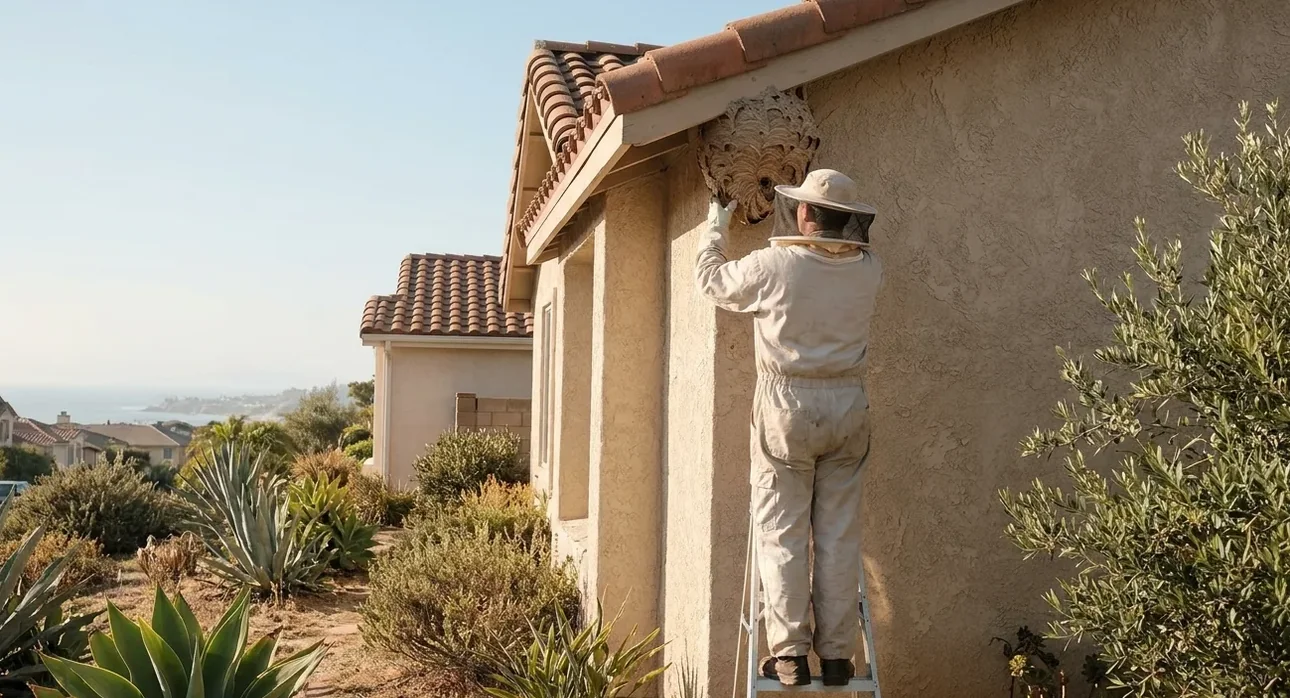
Bee And Wasp Removal in Las Vegas, NV
Professional stinging insect removal with rapid response times throughout the Las Vegas Valley.
- Ants & rodents
- Straightforward pricing
- Local technicians
Call for a rate estimate
- Fast, courteous service
- Clear, upfront pricing
Our local team is taking calls now.





Emergency Response Available
Dealing with aggressive bees or wasps near your Las Vegas property? We respond quickly to protect your family and visitors from dangerous stings.
Licensed Nevada Specialists
Our certified technicians understand desert bee and wasp behavior, delivering safe removal solutions tailored to Southern Nevada conditions.
Convenient Scheduling
We understand Las Vegas schedules are busy. Our team offers morning, afternoon, and weekend appointments to fit your availability.
Bee and Wasp Removal in Las Vegas
Stinging insects are the one category where waiting genuinely raises the risk rather than just the cost. A nest that was a golf ball in April is a football by August, and the temperament of a colony changes as it grows and as the season turns. In the Las Vegas valley there is an additional consideration that does not apply everywhere: Africanized honey bees are established throughout southern Nevada, and any feral honey bee colony here should be treated as potentially Africanized until somebody qualified says otherwise.
What You Are Likely to Have
Honey Bees
Fuzzy, amber and brown, and they nest in a cavity — a block wall void, a water meter box, a chimney, a soffit, or the space between a stucco wall and its sheathing. A honey bee colony is not something to spray, and it is not something to deal with yourself. Aside from the Africanization question, killing a colony inside a wall and leaving it there produces a secondary problem: abandoned comb, honey running down inside the cavity, staining, smell, and a reliable follow-on infestation of ants, cockroaches and beetles. The comb has to come out.
Paper Wasps
Slim, long-legged, and the builders of the open umbrella-shaped grey nests under eaves, patio covers, pergola beams and inside barbecue lids and light fittings. They are defensive rather than aggressive, and most stings happen when someone gets close without noticing the nest.
Yellowjackets
Stockier, brightly banded, and the most short-tempered of the group. They nest in voids and in the ground — a block wall cavity, an abandoned rodent burrow, a wall void, or under decking. Late in the season they turn heavily to scavenging, which is when they start appearing around bins and outdoor eating areas and when the sting calls climb.
Mud Daubers
The solitary builders of small tube-shaped mud nests on walls and under eaves. They are almost entirely harmless and rarely need treating at all — we will say so rather than charge you for removing something that was doing no harm.
Why This Is Not a Do-It-Yourself Job
The over-the-counter approach is a can of wasp spray after dark. It sometimes works on a small, exposed paper wasp nest. It goes badly on a yellowjacket void nest, where the product reaches a fraction of the colony and the rest exits through an opening you cannot see, and it goes badly on anything at height where the ladder is the actual hazard. With honey bees it is simply the wrong action. Most of the stung people we speak to were stung during their own attempt.
Our Bee and Wasp Removal Process
Identification and Assessment
Species, location, size, and how people move around it. A nest over a front door and an identical nest at the back of a lot are not the same job.
Locating the Full Nest
For void-nesting species, the entrance and the nest are not in the same place. We watch the flight line and, where needed, use a thermal check to find the actual extent inside a wall — because treating an entrance while the nest sits three feet away achieves very little.
Treatment and Removal
Work on active nests is done when the colony is least active and in appropriate protective equipment. Exposed nests are treated and then physically removed, because an abandoned nest still attracts scavengers and a removed nest makes it obvious whether the treatment worked.
Honey Bee Colonies and Comb Removal
Where a honey bee colony is in a structural void, the comb and honey have to be removed and the cavity cleaned and sealed. This is the step that gets skipped by cheaper work and the reason those properties get a second colony in the same wall the following season — residual comb scent is a strong attractant. Where a colony can be handled by a beekeeper rather than treated, we will tell you.
Sealing the Cavity
Once the void is clear it gets closed properly. Bees and wasps reuse good sites, and the same wall cavity, meter box or soffit gap will be occupied again next year if it is left open.
Signs Worth Acting On
A Steady Flight Line
Insects entering and leaving the same point in a wall, soffit or block wall in a consistent stream means a nest inside, not passers-by.
Wasps Around an Eave or Patio Cover
Repeated activity around the same corner of a patio cover usually means a nest above head height that has not been noticed yet.
Buzzing Inside a Wall
Audible activity from inside a wall or ceiling, sometimes with a warm patch on the plaster or a stain appearing.
Scavenging in Late Summer
Yellowjackets working bins, pet bowls and outdoor tables in late season means a colony within a few hundred feet.
Discouraging Them Next Season
Seal the cavities that get used: weep holes in block walls, gaps at soffit junctions, unscreened vents, and the lids of meter and irrigation boxes. Check the underside of patio covers and the inside of barbecue lids and outdoor light fittings early in spring, when a nest is the size of a walnut and dealing with it is trivial. Keep bins closed and rinse recycling. Where somebody at the property carries an epinephrine auto-injector, mention it when you book — it changes how we sequence the work and how much of the area we clear first.
★ FAQ
Frequently Asked Questions
We understand that stinging insects create urgent safety concerns, especially with children, pets, or allergic individuals present. We offer same-day service for emergency situations throughout the Las Vegas Valley when you call before early afternoon. For less urgent situations, we typically schedule removal within 24-48 hours at your convenience. Our rapid response times ensure dangerous colonies are eliminated before someone gets hurt.
Africanized honeybees, present throughout the Las Vegas area, exhibit significantly more defensive behavior than European honeybees. They respond to threats with larger numbers of defenders, pursue perceived threats much farther from the hive, and remain agitated longer after disturbances. Both types look nearly identical, making professional identification essential. Our technicians use appropriate safety protocols for both species, with enhanced precautions for Africanized colonies.
Consumer wasp sprays only kill insects they contact directly, rarely reaching the queen or developing brood inside the nest. Partial treatments create highly aggressive survivors that pose increased danger. Hidden nests in walls or ground cavities require specialized application methods that consumer products can't provide. Professional removal ensures complete colony elimination, nest material removal, and prevention measures that stop re-infestation.
Absolutely. Complete honeycomb removal is essential for proper bee hive elimination. Abandoned comb attracts scavenger bees, wax moths, beetles, and rodents. Honey ferments in Las Vegas heat, creating odors and potentially seeping through walls and ceilings, causing expensive damage. We extract all comb material, clean affected areas, perform necessary structural repairs, and seal entry points to prevent future bee activity.
Las Vegas's mild climate allows bee and wasp activity nearly year-round, though peak nesting occurs March through October. Honeybee swarms typically appear in spring, while wasp colonies grow largest in late summer and early fall. Some wasp queens overwinter in protected areas and begin new nests in early spring. Year-round vigilance and early spring inspections provide the best protection, catching new nests before they become established and dangerous.
📍 On the map
Our Systematic Bee and Wasp Removal Process
Safe, thorough elimination from initial contact through prevention
Our proven removal methodology addresses immediate safety concerns while ensuring complete colony elimination and long-term protection for your Las Vegas property.