
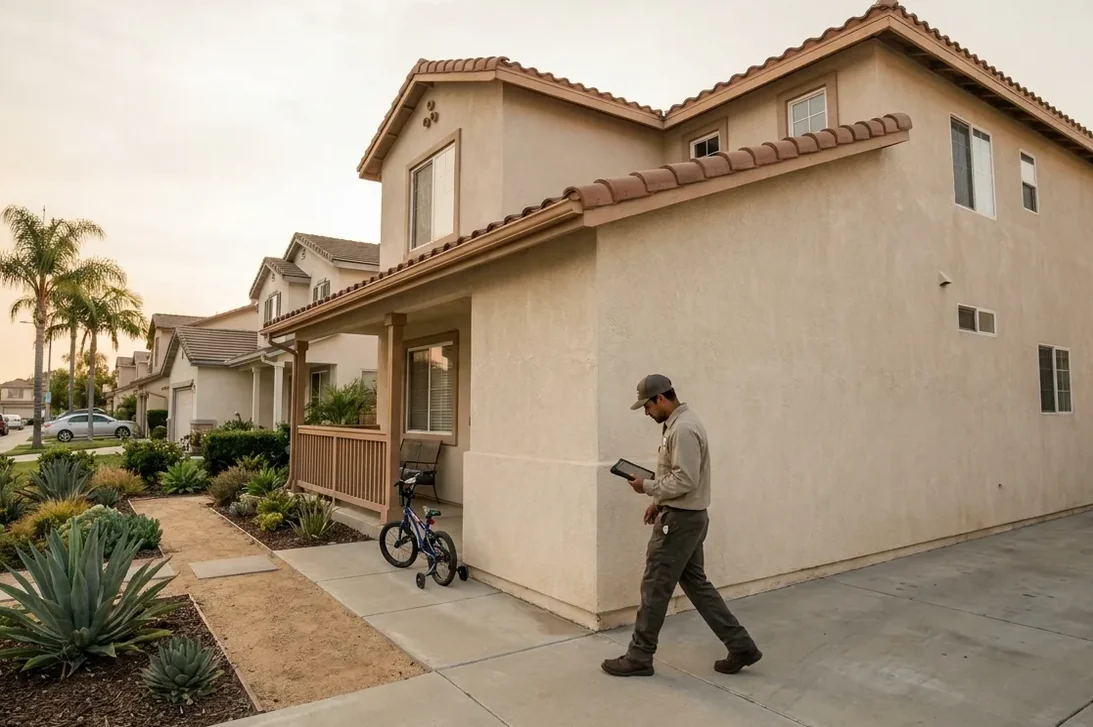
Residential Rodent Control in Las Vegas, NV
Rat and mouse control for Las Vegas homes, from a single sighting to an established population in a roof void
- Rodent control
- Straightforward pricing
- Local technicians
Get a price for your property
- Fast, courteous service
- Clear, upfront pricing
A Las Vegas technician is on the line now.





Your House, Not a Route
Most homes need one thorough job rather than a recurring plan. We will tell you which one yours is.
Trapping Indoors, Not Bait
A baited rodent dies where it nests, which in your house means inside a wall. Interior work is trapping.
Children and Pets Considered
Placement is planned around the household. If you have a dog that investigates everything, say so.
Residential Rodent Control in Las Vegas
Nearly every home rodent problem is a building problem, and buildings can be finished. Find where they are getting in, clear what is already inside, close the openings in metal, clean up what was left behind — and the matter is closed. That is a job with an end to it, which is why most houses do not need a recurring plan and why we will say so.
What Different Kinds of Las Vegas Home Need
Single-Storey Slab-on-Grade Tract Housing
The most common stock in the valley and the most predictable. Entry is usually at the roofline — the gap where tile meets fascia — or at the two bottom corners of the roller garage door. The garage is often the first space occupied, because it connects to the outside at ground level and to the house through the wall cavities.
Two-Storey and Newer Builds
More roofline, more penetrations and a common assumption that a new house is already sealed. It is not: modern construction is sealed against weather, and sealing against a mouse is a standard about a quarter of an inch finer. The air-conditioning line set penetration and the weep screed buried under landscaping gravel are the usual findings.
Older Homes With Evaporative Coolers
The roof or wall penetration a cooler sits in is frequently sealed with material long past its life, and the unit itself supplies reliable water, which in this climate is worth more to a rodent than food. Both the penetration and the surround need checking properly rather than assumed.
Homes With a Pool
Pool equipment enclosures and plant rooms are quiet, sheltered and warm, and they are one of the more common places a population establishes before anybody notices anything indoors. A dead rodent found in pool equipment in summer usually means an active population is using that structure.
Properties Backing Onto Desert or a Wash
External pressure that renews itself regardless of what you do to the building. Sealing still works and is still the right answer — it just means the exclusion is holding a line rather than ending a matter, so it is worth looking over the envelope annually rather than treating it as finished.
Condominiums, Townhouses and Apartments
In a shared building the population is a building population, moving between units through ceiling voids and riser runs. Closing the openings inside your own unit helps and is worth doing; it will not resolve a building-wide problem. We document the findings so they can be handed to a managing agent, because that is usually whose decision it is.
How Las Vegas Construction Lets Them In
The Weep Screed
The metal edge at the base of a stucco wall leaves a deliberate gap so moisture can escape. Landscaping built up against it — gravel, raised soil, a new bed — turns that into a sheltered ground-level doorway and stops it draining at the same time. Clearing it back fixes both.
Garage Door Corners
The two bottom corners where the seal meets the concrete are probably the most-used rodent entrance in the valley. Small, at ground level, in shadow, and almost never looked at.
Slab and Utility Penetrations
Under sinks, behind washing machines, at the water heater: pipes and cables pushed through and the hole never made good. These matter most for mice, and they are the ones missed because something is standing in front of them.
Block Walls
Rats travel the tops of them the way people use pavements, connecting every garden along a street. It is why a rodent problem here is usually a street-level matter that surfaces at whichever building happens to be open, and why a neighbour having work done can be followed by your own.
What a First Visit Involves
An hour and a half to two and a half hours, most of it in places you do not normally go. The roof void is entered and walked rather than looked into from the hatch. The garage, water heater cupboard, laundry and the areas behind kitchen appliances get checked — pulling the appliances out is one of the more productive things we do and one of the least popular.
Then the exterior: roofline, fascia, vents, weep screed, penetrations, garage seals and the trees that reach the roof. At the end you get told what was found, where it is, whether the activity is current, and what the job actually is — before anything is set and before you commit to anything.
Trapping Rather Than Bait, Indoors
Interior work is trapping, and the reason is entirely practical. Rodenticide does not kill at the bait; the animal dies a day or more later wherever it happens to be, which for a roof rat means a roof void and for a mouse means the nest behind an appliance. In a Las Vegas summer a carcass in a cavity produces a severe odour and fly problem within days, and the only real remedy is opening the structure up to find it.
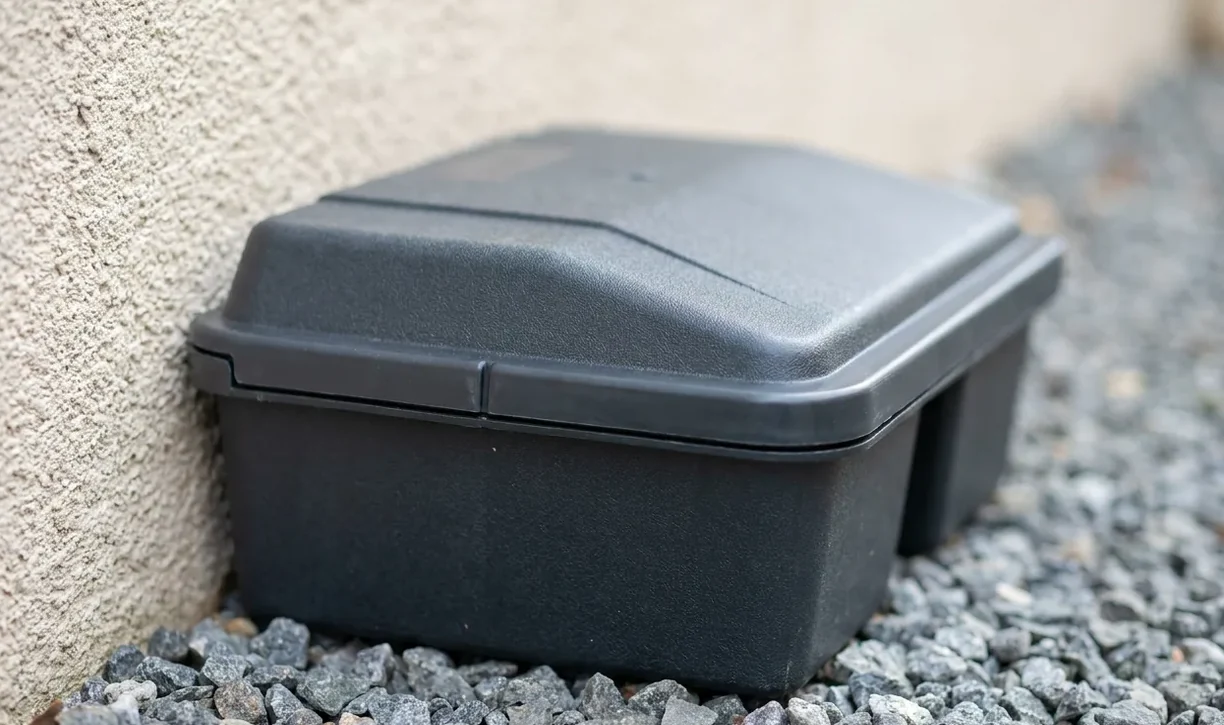
With a trap we know where the animal ends up, because it is in the trap. Where exterior stations are genuinely warranted — sustained outside pressure, desert edge, active construction — they are locked, anchored and placed away from where children and dogs go.
Safety Around Children and Pets
Placement is planned around the household rather than around our convenience. Traps go in the runs behind and under things, which is where the rodents are and where children are not. If you have a dog that investigates everything, or small children who have the run of the garden, tell us — it changes where things go, and on some properties it is a reason to recommend against baiting entirely and do more trapping and sealing instead. On most homes Rodent Control Las Vegas would rather do one thorough job than sell a recurring plan.
What You Can Do Between Visits
- Dry goods and pet food into hard containers with proper lids, not paper sacks
- Bins closed and off the ground, and fallen fruit cleared rather than left to lie
- Palm skirts trimmed out and branches cut back clear of the roofline
- Drip-line leaks fixed promptly — water matters more here than food does
- Stored cardboard reduced, lifted off the floor and pulled away from walls
- Gravel and soil kept off the weep screed
The one thing we would ask you not to do is lay bait indoors.
What a Programme Does Not Include
We are not electricians, roofers or builders, and we will not pretend otherwise. Gnawed cable in a roof void is a fire risk and needs a licensed electrician promptly — we will photograph it, tell you where it is, and say so plainly. Displaced or degraded drain lines are a plumber's work. Hardscape undermined past what exclusion can address is a builder's. Being clear about the boundary is more useful to you than being vague about it.
Knowing When It Is Finished
Three things together, and this is where most self-directed efforts stop early. The catch has stopped rather than slowed — a slowing catch can equally mean the remaining animals have learned the trap line. No fresh droppings are appearing in the areas that were active, checked rather than assumed. And the exclusion has been done and inspected. We come back to confirm all three rather than asking you to judge it.
★ FAQ
Frequently Asked Questions
Usually not, and we would rather say so than add a line to an invoice. A house that has been trapped out and sealed properly generally needs nothing recurring. Ongoing work earns its place where the pressure renews itself from outside -- open desert behind the property, active construction nearby, a neighbouring site that keeps producing animals. That is a minority of homes.
The way we work it is not, and that is largely a consequence of using traps rather than poison indoors. Traps are placed in the runs behind and under things, which is where the rodents are and where children are not. Where exterior bait stations are genuinely warranted they are locked, anchored and sited away from where a dog goes. Tell us about the household and we will plan around it.
An hour and a half to two and a half hours, mostly spent in places you do not usually go. The roof void gets entered and walked. The garage, the water heater cupboard, the laundry and the areas behind kitchen appliances get checked. The exterior gets walked for entry points. You get told what was found, where, whether it is current, and what the job actually is before anything is set.
Trapping normally clears the active animals in one to three weeks. The exclusion is usually a single day once the inspection has established what needs closing. If insulation is contaminated enough to need replacing, that is a separate day and it gets quoted once you have seen the photographs.
More than you might think, and none of it involves buying anything clever. Dry goods and pet food into hard containers rather than paper sacks. Bins closed and off the ground. Fallen fruit cleared and palm skirts trimmed out. Branches cut back clear of the roofline. Drip-line leaks fixed, because water matters more here than food. Stored cardboard reduced and lifted off the floor. What we would ask you not to do is lay bait indoors.
📍 On the map
How We Handle a Las Vegas Home
Inspect, trap, seal, clean, then check it held
The roof void is entered and walked and the exterior is covered properly, because the entry point is usually somewhere nobody has looked. Traps go on the runs the droppings and rub marks describe. Once the catch has stopped, the building is closed in steel mesh and metal flashing, and the droppings, nesting material and soiled insulation come out. Then we come back to check the seals under real conditions.