
Rodent Control in Henderson, NV
Roof rat and mouse control for Henderson homes, from the old townsite to the desert edge at Anthem
- Rodent control
- Straightforward pricing
- Local technicians
Get a price for your property
- Fast, courteous service
- Clear, upfront pricing
A Las Vegas technician is on the line now.





Three Henderson Problems, Not One
The townsite, Green Valley and the Anthem desert edge have different rodent pressure. We treat them as different jobs.
Mature Landscaping Reads as Habitat
Green Valley's trees and irrigation are why roof rats do so well here. The roofline is where it shows up.
Water-Adjacent Properties
Around Lake Las Vegas, reliable water changes what a population can support. Exclusion matters more, not less.
Rodent Control Across Henderson
Henderson is not one place as far as rodents are concerned, and treating it as one is why a lot of work here produces disappointing results. A 1940s townsite bungalow, a Green Valley house under mature trees, and a new build at the Anthem desert edge have three genuinely different problems, and the inspection that finds one will miss the others.
The Older Townsite
The original townsite housing is the oldest stock in the city, and its rodent problem is a construction problem rather than a landscaping one.
Seals That Have Given Up
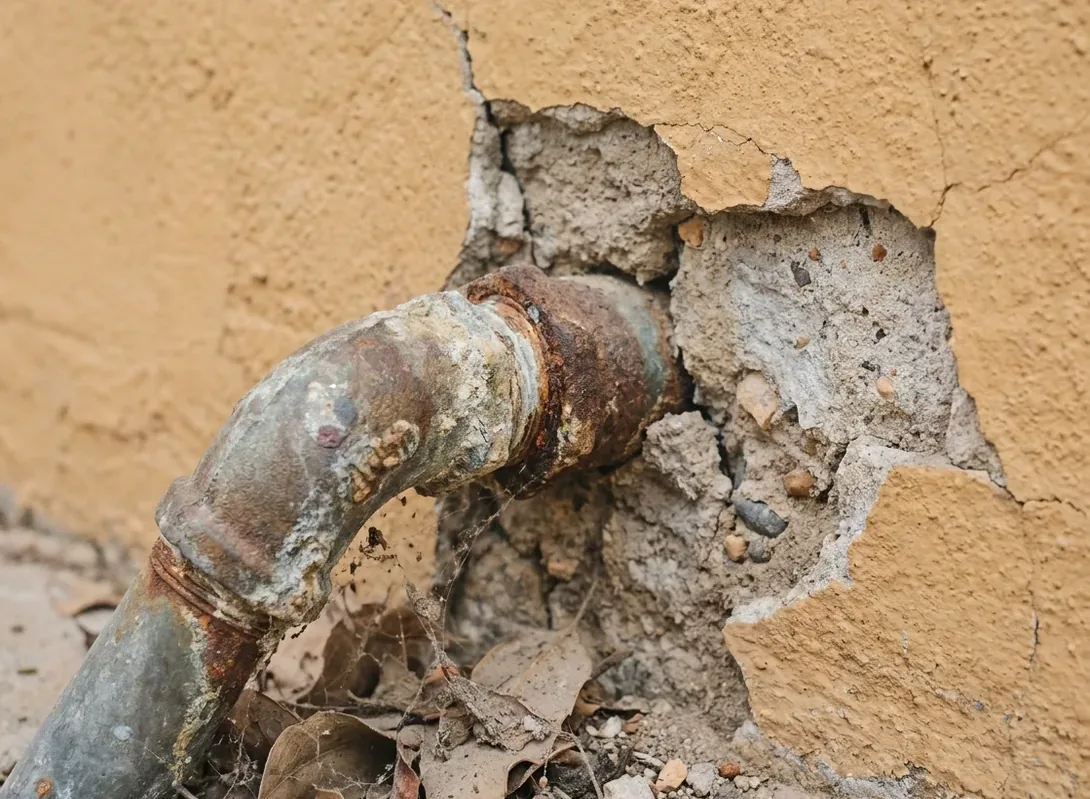
Decades of sun does predictable things. Vent screening goes brittle and breaks, so an attic vent becomes a hole with a decorative cover over it. Garage door seals harden and lift away from the concrete, opening the two bottom corners that are already the most-used rodent entrance in the valley. Foam packed around a pipe or a cooler penetration perishes and falls out. None of that is neglect; it is simply what these materials do here over fifty years.
Mice More Than Rats
Older stock offers a great many quarter-inch openings, and a quarter of an inch is all a house mouse needs. Townsite jobs skew towards mice more than the rest of the city does, which changes the work: mouse exclusion is fussier, the trap density has to be much higher, and the productive part of a first visit is pulling appliances out rather than going up a ladder.
Green Valley and the Established Tract Streets
Green Valley has the opposite problem. The construction is newer and tighter, and what drives rodent pressure here is everything outside the building.
Mature Landscaping and Roof Rats
Thirty years of growth puts branches on rooflines. Irrigation supplies water year round in a desert. Fruit trees drop windfall in season. Block walls connect every garden along a street into a continuous elevated highway. That combination is close to ideal for roof rats, and it means a population here belongs to a street rather than to a house — it gets indoors at whichever building happens to be open.
The practical consequence is that a Green Valley job is largely done outdoors and at roof level. Palm skirts trimmed out, branches cut back clear of the tiles, windfall cleared, and then the fascia gap and vents closed in metal. Traps set in a kitchen will catch nothing, because the animals are never in the kitchen.
Reading the Wall Tops
Because rats travel block walls, the rub marks and droppings left along the top of one tell us which direction the pressure is arriving from before we have opened anything. It is one of the more useful things about working these streets, and it saves a good deal of guessing.
Anthem, Inspirada and the Desert Edge
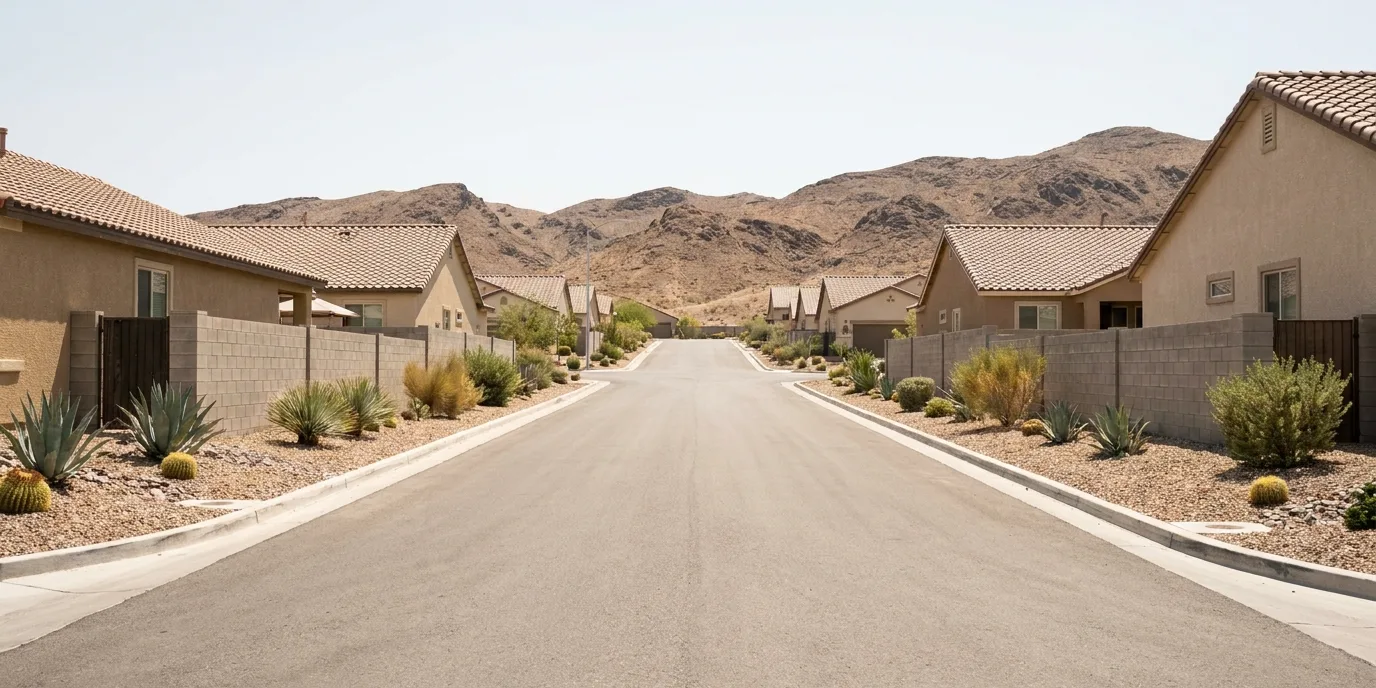
Out on the southern edge the housing is newest and the pressure is most external.
Open desert produces rodents, and every phase of grading clears ground that was holding a population, which then moves to the nearest cover — the finished street. A house two years old with rats in the roof void is almost always displacement rather than a defect, and the timing usually matches construction activity nearby closely enough to be obvious once pointed out.
New construction is not sealed construction, either. What we find on these houses is consistent: the air-conditioning line set penetration sealed once with foam, the roller garage door corners, weep screed buried under landscaping gravel, and vent screening fine enough for insects but not for a mouse. Rodent Control Las Vegas inspects for the pressure that applies to your street rather than running one treatment across the city.
The pressure eases once a construction phase finishes. What does not ease on its own is a population already established in a roof void, which has shelter and often water and no reason to leave.
Lake Las Vegas and the Water-Adjacent Properties
Permanent open water changes the arithmetic. In most of this valley water is the factor limiting how large a rodent population can get; remove that limit and the population living outside a building can be considerably larger than an equivalent street a mile inland.
It does not make an infestation inevitable. It means the quality of the exclusion on the building is doing more work here than it would elsewhere, and that dense waterside planting against a wall — cover to approach unseen, and a route up — is worth clearing back.
What Henderson Calls Usually Turn Out to Be
Noise in the Ceiling After Dark
Scratching that starts within an hour or two of sunset, moves along a line rather than staying in one place, and comes from above the ceiling is close to diagnostic for roof rats. Noise from one fixed position continuing through the day is more often birds in a vent or under a tile.
Something in the Garage
Droppings behind stored boxes, a chewed bag of pet food, tracks in dust. Garages are frequently the first space entered because they connect to the outside at ground level and to the house through the wall cavities. Found at that stage it is usually a short job, because the entry is close by.
Chewed Irrigation
Drip line is soft, easy to open and carries water, which in a desert landscape is worth defending. Repeated failures in the same area, or an unexplained damp patch in gravel, are often the first sign anybody notices.
A Smell With No Obvious Source
Usually a carcass in a wall cavity or roof void, and usually the consequence of bait laid indoors — by a previous owner or a previous company. It is one of the calls we treat as urgent, because in a Henderson summer it does not improve with waiting.
Working With Us in Henderson
The inspection establishes which Henderson you are actually in, because the answer determines where the work happens. Then trapping on the runs, sealing in steel and metal, cleanup of what was left behind, and a return visit to check the seals under real conditions.
Where the pressure is coming from something outside your control — a neighbouring lot, a boundary of untrimmed palms belonging to someone else, an active construction phase — we will say so plainly rather than implying that sealing your building will change the surroundings. It will not. It will keep them out of your building, which is the part that matters and the part we can guarantee.
★ FAQ
Frequently Asked Questions
Because the landscaping that makes those streets pleasant is also what supports roof rats. Mature trees give routes onto roofs, irrigation gives reliable water in a desert, and block walls connect one garden to the next for the length of a street. The animals travel high and get in at the roofline, so the noise is above the ceiling rather than at floor level. It is a neighbourhood-wide pressure that shows up at whichever house is open.
Yes, and it is a construction question rather than a housekeeping one. The original townsite housing predates modern sealing detail: gaps at the weep screed, timber that has moved, garage door seals long past their life, and vent screening that has perished in fifty years of sun. Mice need a quarter of an inch and older stock offers a lot of quarter-inch openings.
The pressure is external and it renews itself. Open ground and ongoing grading keep producing animals that move to the nearest cover, which is the finished street. Sealing the building still works and is still the right answer, but on the desert edge it is holding a line rather than solving a one-off problem, so it is worth checking the envelope annually.
Usually yes, and the part that matters most is the wiring. Rodent incisors grow continuously and cable sheathing is a convenient thing to wear them down on. We check for gnawed cable on every attic inspection and photograph it, and where the sheathing is breached our advice is always to get an electrician to it promptly. Beyond that it is flattened and soiled insulation, which costs you thermal value and has to be replaced rather than cleaned.
📍 On the map
How We Handle Rodents in Henderson
Roofline first, then the runs, then close the building
Nearly every Henderson job starts above head height, because the roof rat is the valley's rodent and it gets in where the tile meets the fascia. We walk the roof and the attic, read the runs from droppings and rub marks, trap on those runs, and then close the building in steel and metal. The last part happens outdoors, on the palms, fruit trees and block walls that made your roof worth reaching.