
Rodent Control in North Las Vegas, NV
Rodent control for North Las Vegas homes, warehouses and distribution buildings, from the desert edge to the older southern streets
- Rodent control
- Straightforward pricing
- Local technicians
Get a price for your property
- Fast, courteous service
- Clear, upfront pricing
A Las Vegas technician is on the line now.





Desert-Edge Exclusion
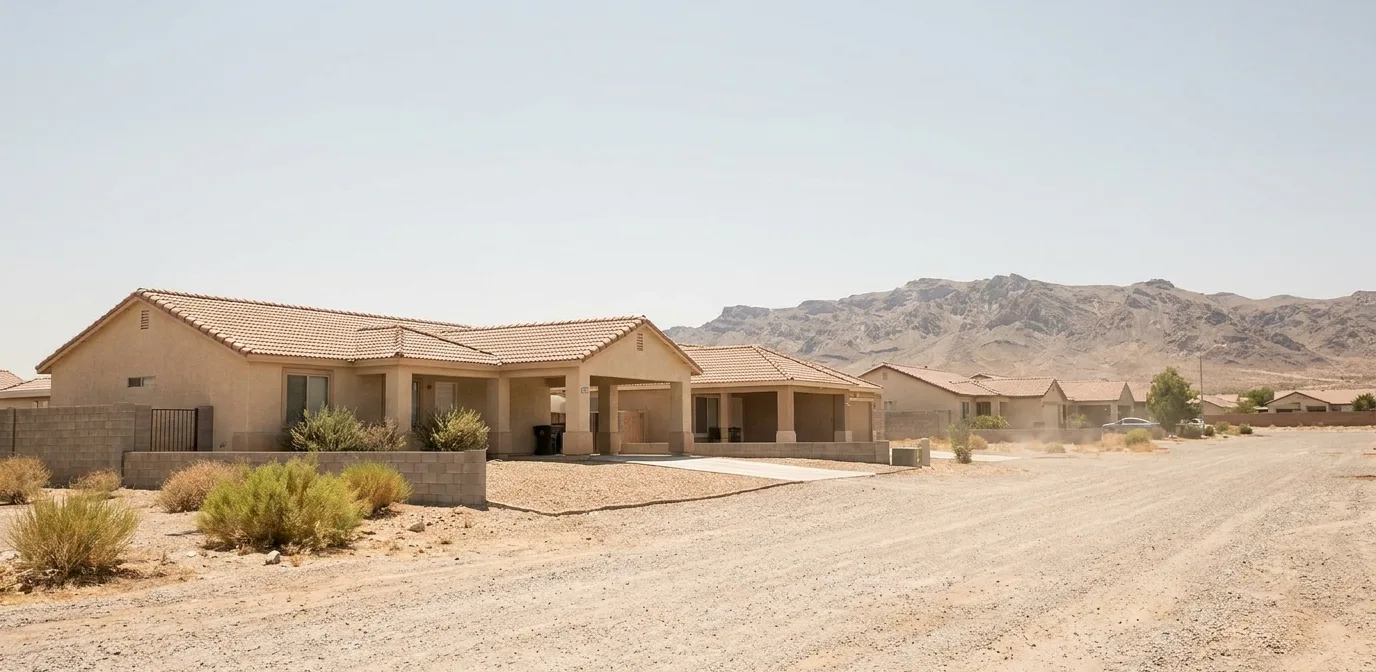
The northern subdivisions back onto open desert and active grading. We seal the building rather than pretend to clear the surroundings.
Warehouse and Distribution
Roller doors, personnel doors and roof vents are how rodents get into a big building. Exclusion and monitoring beat treatment.
Older Southern Streets
Degraded drain lines and mature landscaping mean ground rats below and roof rats above. Both are fixed at the entry.
Rodent Control Across North Las Vegas
North Las Vegas covers three quite different kinds of property, and the rodent work in each has little in common with the others. The older southern neighbourhoods, the industrial and distribution corridor, and the newer subdivisions on the northern desert edge need three different inspections and three different answers.
The Older Southern Neighbourhoods
The southern part of the city has the oldest housing stock, and the two things that matter about it are the age of the drain infrastructure and the age of the seals.
Ground Rats Below
Degraded and displaced drain lines give Norway rats sheltered routes between properties. This is the heavier, blunter-nosed rat that stays low — sewers, crawl spaces, the ground behind bin stores — rather than the roof rat that dominates most of the valley. It matters practically, because traps for a ground rat go at floor level along walls and in service areas, not in a roof void.
A floor drain that has dried out is one of the more common routes in and one of the easiest things to fix. The water sitting in the trap is the seal; when a garage drain or a disused shower has not run for a year, that seal is gone. A jug of water restores it. Rodent Control Las Vegas works both sides of that: houses closed properly, and larger buildings monitored where they cannot be.
Roof Rats Above
The mature landscaping in these streets does the same thing it does everywhere else in the valley — puts branches on rooflines and supplies water year round. So the older neighbourhoods frequently have both animals, at different levels of the same building, which is the main reason an inspection here needs to cover the roof void and the crawl space rather than picking one.
The Industrial and Distribution Corridor
Warehousing and distribution is a genuinely different problem, and most of it comes down to a single constraint: the building cannot be closed, because the doors have to open for the business to work.
Where They Get In
Almost always the doors and the roof. The bottom corners and side seals of roller shutters. Personnel doors propped or left on the latch. Dock levellers and the gaps around them. And above, roof vents, services penetrations and the roofline itself.
What Actually Works
Exclusion on a warehouse is a matter of seals, brush strips, strip curtains and door discipline rather than closing the envelope. Beyond that it is monitoring: a maintained perimeter of locked exterior stations that tells you which side the pressure is arriving from and whether it is changing. That information is the valuable part, more than anything the stations kill.
Storage matters as much as structure. Pallets and cardboard against a wall give harbourage and a travel route in one, and racking pulled clear with an inspection aisle behind it removes both. It is unglamorous and it does more than any treatment.
Documentation
Where there is an audit or inspection regime, what is asked for is a consistent history — what was placed where, what activity was seen, what was done about it — rather than a certificate. That cannot be assembled retrospectively, which is why it is kept properly from the start.
We schedule around shift patterns and trading rather than treating them as an obstacle.
The Northern Subdivisions
North of the city the newest housing meets the most open ground, and the pattern is the same one that plays out across the valley's growing edges.
Grading clears ground that was holding a rodent population, and those animals move to the nearest cover — the finished street. A house a few years old with rats in the roof void is displacement rather than a defect. The pressure eases once that construction phase moves on; a population already established inside does not leave with it.
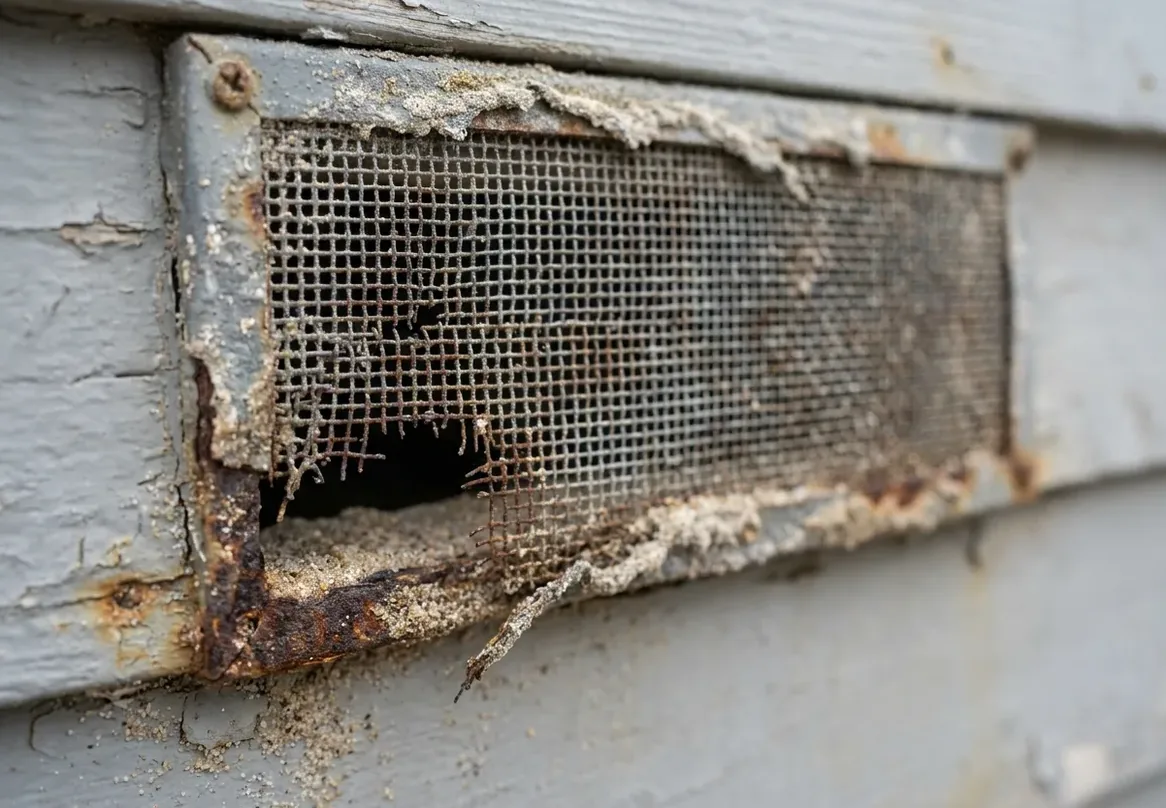
New construction here is sealed against weather rather than rodents, and the openings are the usual four: the air-conditioning line set penetration, the roller garage door corners, weep screed buried by landscaping gravel, and vent screening fine enough for insects.
Washes and Flood Channels
The flood control network runs through the area and gives rodents sheltered travel over long distances, connecting places that otherwise have no relationship. A property backing onto a wash takes pressure that has nothing to do with its immediate neighbours.
Monsoon surges flush the channels, which displaces whatever was sheltering in them into the surrounding streets — a short, sharp increase in activity that follows the weather rather than the season.
What North Las Vegas Calls Usually Turn Out to Be
Something in a Warehouse Overnight
Usually a roller door seal or a personnel door, and usually visible in the dust once somebody looks along the wall base rather than out in the open floor.
Noise in a New Build
Roof rats through the line set penetration or an attic vent, and construction nearby that explains the timing.
Activity After a Storm
Displacement from the flood channels. It settles, but the building still has to be closed if it let anything in.
Evidence at Floor Level in an Older House
Points at a ground rat and at the drain network rather than at the roof, and it changes where everything gets set.
Working With Us in North Las Vegas
The inspection establishes which of the three situations you are actually in, because the answer determines whether the work happens in a roof void, at a loading dock or along a crawl space. On a house we close the envelope properly and that is usually the end of it. On a warehouse we close what can be closed and monitor what cannot, and we are honest that a building whose doors stand open for trade is a boundary to be managed rather than a problem to be finished.
★ FAQ
Frequently Asked Questions
Because new construction is generally the cause rather than the cure. Every phase of grading clears ground that was holding rodents and the things they eat, and those animals move to the nearest cover, which is the finished street next door. It is displacement rather than a building defect, and the pressure usually eases once the work moves on -- though the building still has to be closed properly in the meantime.
Almost always the doors and the roof. The bottom corners and side seals of roller shutters, personnel doors left on the latch, dock levellers, and roof vents and services penetrations above. A warehouse cannot be sealed the way a house can, because the doors have to open for trade, so the work shifts towards strip curtains, brush seals, door discipline and monitoring at the boundary.
Partly, and more often here than at a house. A large site with constant external pressure is exactly where a maintained perimeter of locked exterior stations earns its place, because the building cannot be fully closed. What stations will not do is clear a population already nesting inside the structure, so they sit alongside trapping and exclusion rather than replacing them.
Yes, and for most commercial buildings it is the only sensible way to do the exclusion work. We schedule around trading and shift patterns rather than treating that as an obstacle, and the documentation is kept in a form an audit or inspection will accept.
📍 On the map
How We Handle Rodents in North Las Vegas
Close what can be closed, monitor what cannot
On a house, the building gets sealed properly and that is usually the end of it. On a warehouse it is not possible, so the emphasis moves to door seals, brush strips, roof penetrations and a monitored perimeter that tells you which side the pressure is coming from. Either way the work starts with an inspection that finds the actual routes rather than assuming them.