
Squirrel Removal in Las Vegas, NV
Ground squirrel burrow work, exclusion and structure repair across the Las Vegas valley
- Rodent control
- Straightforward pricing
- Local technicians
Get a price for your property
- Fast, courteous service
- Clear, upfront pricing
A Las Vegas technician is on the line now.





Burrow Mapping, Not Hole Plugging
A burrow system has several entrances. We map the network before closing anything, so the traffic stops instead of moving.
Hardscape Protection
Slabs, pool decks and driveways settle once the soil under them goes. We deal with the burrow before the concrete tells you.
Lawful Options, Explained First
Nevada regulates wildlife and relocation is often not permitted. We tell you what is actually allowed before any work starts.
Squirrel Removal in Las Vegas
Squirrels are not the first animal people associate with the Mojave, and that is part of why the calls come late. Southern Nevada has two that matter: the round-tailed ground squirrel and the antelope ground squirrel, both native, both entirely at home in irrigated suburban landscaping — and, in the greener and older parts of the valley, occasional tree squirrels around mature plantings and golf course edges. Ground squirrels do not usually come into an attic the way an eastern grey would. What they do is burrow, and a burrow network under a patio slab, a pool deck or a driveway causes exactly the kind of damage that is expensive precisely because nobody was watching for it.
What They Actually Do to a Property
Undermining Hardscape
A ground squirrel burrow follows the easy route, which on a Las Vegas property means the void alongside a footing, under a patio slab, beneath a pool deck or along an irrigation trench. Removing soil from under a slab produces settlement, then cracking, then a trip hazard. The animals are long gone before the concrete tells you.
Chewing Irrigation and Wiring
Drip line is soft, carries water, and runs everywhere. Low-voltage landscape lighting cable is the same. Both get chewed, and the water loss from a punctured line often shows up as a mystery wet patch or a jump in the bill before anyone connects it to an animal.
Landscape and Garden Damage
Bulbs, roots, new planting and vegetable beds. A newly landscaped yard is unusually attractive to them.
Getting Into Structures
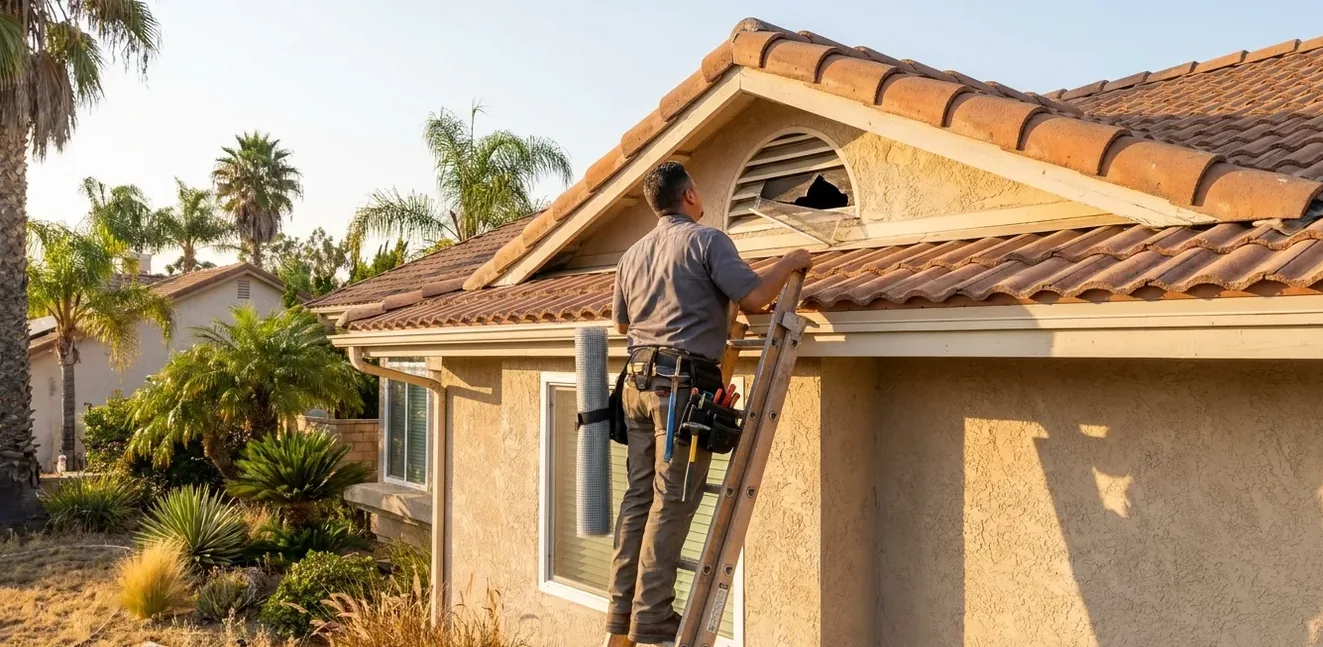
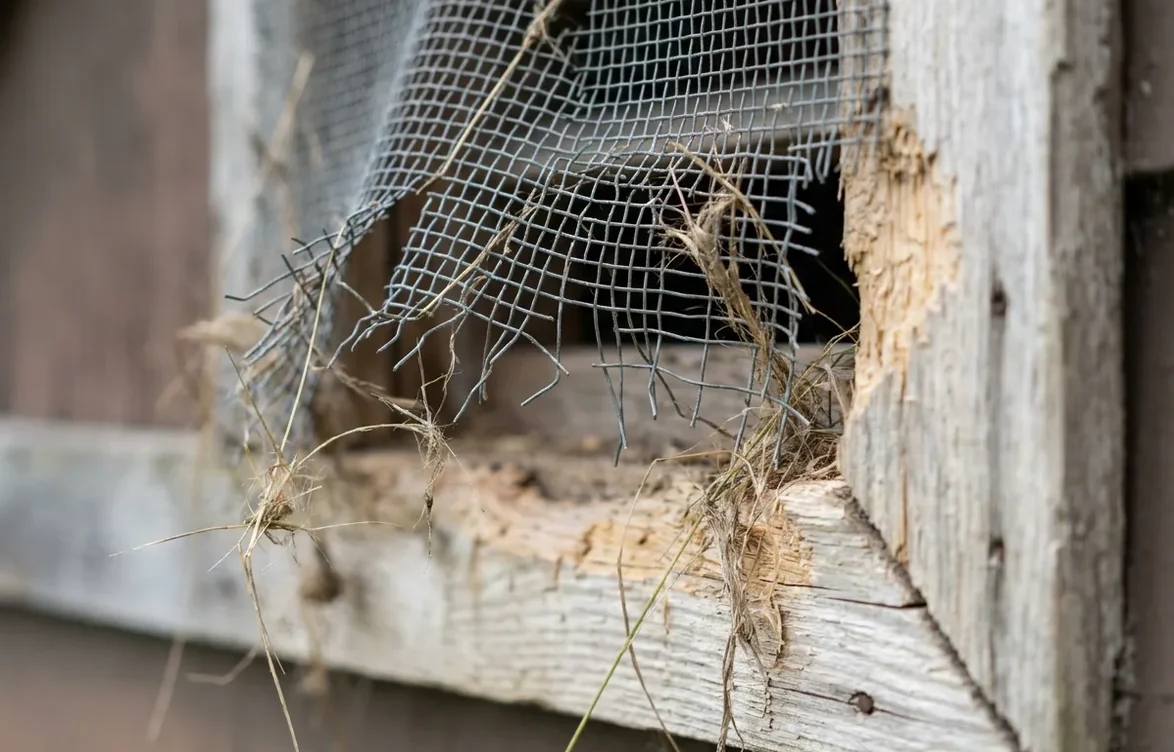
Where they do get into a building it is usually a garage, a shed, a crawl space or the void under a manufactured home rather than a second-storey attic — through a gap at a garage door corner, a failed vent screen, or an opening where a utility passes through a wall. Once inside they nest, and the nesting material and droppings become their own problem.
What the Law Allows, and Why We Say So Up Front
Wildlife is regulated in Nevada, and the rules are not the same for every species or every situation. Relocation in particular is not the simple, humane-sounding option people expect it to be — it is restricted, it is frequently illegal, and released animals into unfamiliar territory generally do badly. Rather than promise you an outcome that sounds good on a website, we will look at what you actually have and explain the lawful options for that species on that property before any work starts. If a situation calls for a licensed wildlife specialist rather than us, we will tell you that too.
Our Squirrel Removal Process
Inspection and Identification
Which species, how many, where the burrow entrances are, and whether anything has got into a structure. Burrow openings are usually two to three inches across, clean-edged, often tucked against a footing, a wall base or under a shrub, with a fan of excavated soil. We map the network rather than plugging the first hole we find, because a burrow system typically has several entrances and a plugged single opening simply moves the traffic.
Removal
Trapping is done with the right trap for the species, set where the animals actually travel, and checked on a schedule rather than left out. Doing this properly is largely about placement and patience.
Exclusion and Burrow Closure
This is the part that decides whether the problem comes back. Openings into structures get closed with heavy-gauge galvanised mesh and metal flashing rather than foam or timber, both of which are chewed through. Burrow systems are closed once we are confident nothing is inside them, and where hardscape is being undermined we will tell you plainly what needs a builder rather than a pest technician. Rodent Control Las Vegas maps the whole burrow network before anything is closed.
Cleanup and Decontamination
Where an animal has nested inside a structure the nesting material, droppings and contaminated insulation come out and the area is treated. This matters for smell, for the parasites that come with a nest, and because the scent left behind actively attracts the next animal.
Follow-Up
We come back and check the exclusion work has held and that no new openings have appeared.
Signs You Have a Squirrel Problem
Holes With Fanned Soil
Clean, roughly circular openings two to three inches across, usually against a wall, a footing or the base of a shrub, with excavated soil spread below.
Settling or Cracking Hardscape
A patio slab, walkway or pool deck that has begun to sink or crack at one corner with no other explanation.
Chewed Irrigation Line
Repeated drip-line failures in the same area, or a persistently wet patch in gravel.
Daytime Activity Along Walls
Ground squirrels are active in daylight and run defined routes along block walls and kerb lines. Seeing the same route used repeatedly means a resident population rather than a passer-by.
Noise in a Garage or Crawl Space
Scratching or scrabbling during the day — as distinct from the after-dark noise that usually means rodents.
Making the Property Less Attractive
Keep fallen fruit picked up and bird seed off the ground, since both are a reliable draw. Trim shrubs up off the soil so burrow entrances have no cover — cover matters more to a ground squirrel than almost anything else. Fix drip-line leaks quickly, because a leak in a dry landscape is a water source worth defending. Where a wall or a slab edge is a recurring entry point, buried hardware cloth at the footing is worth doing once and forgetting about.
Timing, and Why It Matters
Late Winter and Spring
Breeding season. Sealing a structure at this point risks trapping young inside a void where they cannot get out, which is both inhumane and the fastest route to an odour problem inside a wall. Where there is any chance of dependent young, we deal with the adults and the exclusion in the right order rather than simply closing everything up.
Summer
Ground squirrels are most active in the cooler parts of the day and much less so through the worst of the afternoon heat, which changes when traps are worth checking. Burrow activity is easiest to read early in the morning.
Autumn
Caching behaviour increases and so does digging. This is when new burrow openings tend to appear and when damage to irrigation and planting climbs.
Winter
Activity falls off but the burrow network stays, and a system left open is simply occupied again in spring. Closing burrows in winter, once we are confident they are empty, is often the tidiest time to do it.
What We Will Not Tell You
We will not promise you that squirrels will never come back. On a property adjoining open desert, irrigated landscaping or a golf course edge, new animals will keep arriving — the ground next door produces them. What exclusion does is stop them establishing on your property and stop them getting under your concrete, which is the part that actually costs money. Anybody offering a permanent guarantee against a native species arriving on a desert lot is selling you something they cannot deliver.
★ FAQ
Frequently Asked Questions
Mostly the round-tailed and antelope ground squirrels, both native and both entirely at home in irrigated suburban landscaping. Unlike the tree squirrels people picture, these burrow rather than heading for an attic, which is why the damage usually shows up in hardscape and irrigation rather than in a ceiling. Tree squirrels do turn up in the greener, older parts of the valley near mature plantings, but they are the minority of our calls.
Often we cannot, and we would rather say so than promise something that sounds humane and is not lawful. Wildlife is regulated in Nevada and relocation is restricted; released animals in unfamiliar territory also tend to do badly. We look at what you actually have on the property and explain the options that are legally available for that species before any work begins.
Timing is the quickest tell. Ground squirrels are active in daylight and run visible routes along block walls and kerb lines; rodent activity is after dark. Burrow openings are also distinctive: two to three inches across, clean-edged, usually tucked against a footing or under a shrub, with a fan of excavated soil below.
It is worth checking. A burrow follows the easy route, which on a Las Vegas property often means the void alongside a footing or under a slab. Removing soil from beneath concrete produces settlement and then cracking, and the animals are usually long gone before the slab shows it. Where hardscape is being undermined we will say plainly that the repair is a builder's job, not ours.
Drip line is soft, easy to open and carries water, which in a desert landscape is worth defending. Low-voltage lighting cable gets the same treatment. Repeated failures in the same area, or an unexplained damp patch in gravel, are usually the first sign anybody notices.
It depends on the size of the burrow network and how much exclusion is needed. Removal is a matter of correct trap placement and patience rather than speed, and the exclusion and burrow closure that follow are what decide whether the problem returns. We will give you a realistic picture after the inspection rather than before it.
Taking away cover and food. Trim shrubs up off the soil so burrow entrances are exposed, keep fallen fruit and spilled bird seed cleared, and fix drip-line leaks promptly. Where a wall or slab edge is a recurring entry point, buried hardware cloth at the footing is worth doing once and forgetting about.
📍 On the map
How We Handle Squirrels in Las Vegas
Identify the species, map the burrows, then exclude
We start by confirming which squirrel you have and finding every entrance to the burrow system rather than the obvious one. Removal is done with the right trap for the species, placed where the animals actually travel and checked on a schedule. Openings into structures are then closed with heavy-gauge galvanised mesh and metal flashing, never foam or timber, and burrows are closed once we are confident nothing is inside them.