
Rodent Infestation Inspection in Las Vegas, NV
A documented inspection of the whole building, for owners, buyers and managers who want to know what is actually there
- Rodent control
- Straightforward pricing
- Local technicians
Get a price for your property
- Fast, courteous service
- Clear, upfront pricing
A Las Vegas technician is on the line now.





A Report, Not an Opinion
You get photographs, locations and a written finding you can act on, keep, or hand to a builder or a seller.
The Whole Envelope
Roof, attic, garage, crawl space, utility runs and the exterior. Rodents are found where people do not look.
Including 'Nothing Here'
A clean inspection is a real result and we will say so. We do not find a problem in order to sell the next visit.
Rodent Infestation Inspection in Las Vegas
An inspection is a piece of work in its own right, not a sales call with a torch. What you are buying is a documented answer to four questions: is something living here, what is it, how did it get in, and how long has it been going on. Everything that follows — whether that is a full programme of work, a single vent screen, or nothing at all — depends on getting those right.
We book them for three sorts of reasons. Owners who have heard something and want to know what it is. Buyers who want a roof void looked at before they commit to a house. Managers of commercial or multi-unit buildings who need a documented position rather than an impression.
What Gets Looked At
Outside First
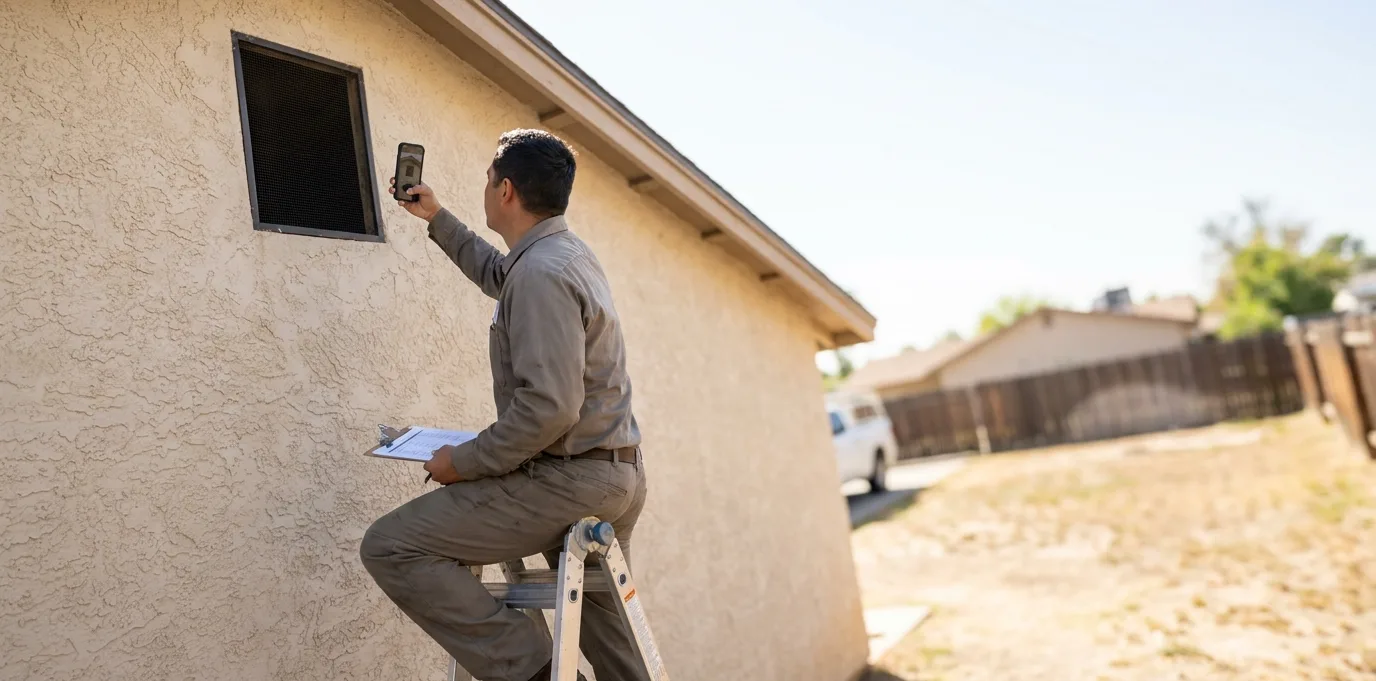
We work the exterior before the interior, because the way in is usually visible from outside and it frames everything found indoors. That means the roofline and the fascia along its whole run, the tile lines at ridges and valleys, gable and attic vents and the condition of their screening, dryer and bathroom outlets, the weep screed along the bottom of the stucco and whether soil or gravel has been built up against it, every utility and plumbing penetration, the garage door seals and particularly the bottom corners, and the trees and structures that put an animal within reach of the roof. An inspection from Rodent Control Las Vegas is booked as a piece of work in its own right, not as a preamble to a quote.
The Roof Void
Entered and walked, not looked into. This is where the useful evidence is on most valley properties, and it is the part a general home inspection is least likely to have covered properly. We are reading the insulation as much as anything else — runs flatten it, and the pattern of flattening is a map of movement.
The Rest of the Envelope
Garage, crawl space where there is one, water heater cupboard, laundry, pantry and food storage, and behind and beneath the kitchen appliances. Mice in particular live in places that require pulling things out, and an inspection that does not do that is not an inspection.
What Counts as Evidence
No single sign settles anything. What matters is what is present together and where.
- Droppings — the most useful indicator. Size and shape separate rat from mouse; distribution points towards a nest, because droppings concentrate where animals spend time rather than where they pass through.
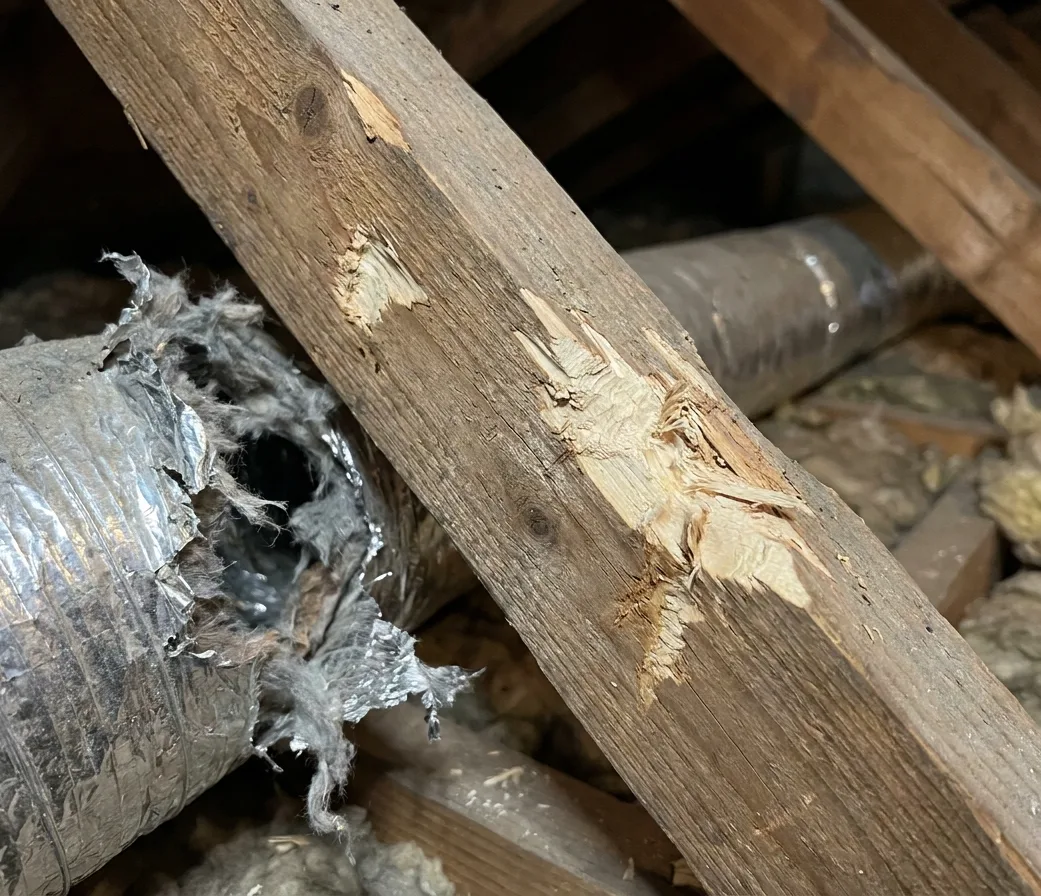
- Gnawing — on timber, cable, pipework, stored goods and packaging. The size of the incisor marks distinguishes species.
- Rub marks — greasy dark smears where fur has passed the same edge repeatedly. These indicate an established route rather than an occasional visit.
- Nesting material — shredded insulation, paper, fabric and plant material gathered into a void or a corner.
- Runs — flattened tracks through blown insulation, and tracks in dust on a garage floor or a rafter.
- Smell — distinctive and persistent in an enclosed void, and often the first thing noticeable on entering an attic that has held a population for a while.
Current or Historic
This is the question people most want answered and the one most often fudged. Evidence of a rodent is not evidence of a rodent now, and a house that had a problem two years ago that was dealt with properly is in a different position from one that has an active population.
Fresh droppings are dark, soft and pliable. In this climate they dry to grey and become brittle within a few days, which makes dating them more reliable here than it would be somewhere humid. Fresh gnawing shows pale on timber and darkens as dust settles into it. Rub marks build slowly and persist long after animals have gone, so they tell you about history rather than about the present.
Where the picture is genuinely ambiguous we say so and leave monitoring — non-toxic blocks and tracking material in the places activity would show — and come back. That settles it properly. Guessing, in either direction, is worse than admitting the evidence is unclear.
What You Get
A written report with photographs, each located so you know which vent, which corner, which run of fascia. It says what was found, where, what species, whether the activity is current, and what we would recommend doing about it. It also separates plainly what is pest control work from what belongs to a roofer, a builder or an electrician, because those are frequently different trades and it is not useful to blur them.
For a purchase, that document is the thing worth having. A photographed open fascia line and soiled insulation is a specific, costed conversation with a seller. "The inspector thought there might be rats" is not.
Clean Results
Plenty of inspections come back clean, and some find one small thing — a single unscreened vent, a garage door seal that has lifted — that is a short job rather than a programme. We report those as what they are.
An inspection that always finds a serious problem is not an inspection, it is a quotation with extra steps. We would rather be the company you call again in three years because the last report was straight than the one that found an infestation in an empty roof void.
Commercial and Multi-Unit
Larger buildings need more time and a different emphasis. Suspended ceilings and service voids carry activity across a whole building and frequently past a party wall, which raises the question of whose problem it is and makes documentation more important rather than less. Bin stores, delivery doors and grease traps concentrate the pressure. Where there is an inspection or audit regime, the report needs to be in a form that satisfies it.
We scope and price these on the phone before attending, including access requirements and whether work needs to happen outside trading hours, rather than arriving and revising the estimate.
Before We Arrive
Two things help. Clear access to the attic hatch, the water heater cupboard, the garage and any crawl space entry, because time spent moving stored boxes is time not spent inspecting. And tell us what you have already done — traps set, bait laid, gaps filled. People are sometimes reluctant to mention it, and it genuinely changes how the evidence reads. Bait taken from a station tells us something useful. Bait taken from a station we did not know about tells us nothing.
★ FAQ
Frequently Asked Questions
The building envelope and the places rodents use inside it: the roof void and its insulation, the roofline and fascia, vents and their screening, the garage and particularly the door seals, the crawl space where there is one, utility and plumbing penetrations, the water heater cupboard, behind and under kitchen appliances, food storage, and the exterior walls and grounds including trees that reach the roof.
Droppings, and where they are, which tells us species and how recent. Gnawing on timber, cable, pipework and stored goods. Greasy rub marks where fur has repeatedly passed the same edge. Nesting material. Tracks in dust. Flattened runs through blown insulation. Smell, particularly in an enclosed void. Any one of those on its own may be historic; together they tell us whether something is living there now.
Usually, yes. Fresh droppings are dark and pliable and dry to grey and brittle over a few days in this climate. Gnawing shows pale on fresh timber and darkens with dust. We also lay monitoring where the picture is ambiguous and come back, which settles it properly rather than by guesswork.
Yes, and it is worth doing before contracts rather than after. A roof void with soiled insulation, gnawed cable and an open fascia line is a real cost, and it is the sort of thing a general home inspection can pass over. You get the photographs and the written finding, which is the useful thing to have in a negotiation.
We will tell you what we found and what we would do about it, and if the answer is that nothing needs doing, that is what you will hear. An inspection that always finds something is not an inspection. Plenty of the ones we run come back clean, and some find a single open vent that is a ten-minute fix rather than a programme of work.
For a typical valley house, an hour and a half to two and a half hours depending on how accessible the roof void and crawl space are. Commercial buildings and multi-unit properties take longer and we will give you a realistic estimate when you call rather than turning up and revising it.
Clear access to the attic hatch, the water heater cupboard and the garage, and let us know where you have heard or seen anything. If you have been setting your own traps or laying bait, tell us -- it changes how we read the evidence, and it is genuinely useful information rather than something to be embarrassed about.
📍 On the map
How We Inspect a Las Vegas Property
Envelope first, then the evidence, then a written finding
We work the outside of the building before the inside: roofline, fascia, vents, weep screed, penetrations and the trees that reach the roof. Then the roof void, garage, crawl space and the areas behind appliances and in food storage. Everything found is photographed and located, activity is assessed as current or historic, and you get a written report with a plain account of what needs doing and which of it is ours to do.