
Same-Day Rodent Removal in Las Vegas, NV
Urgent attendance for an animal in the living space, a dead rodent odour, or a business that cannot trade
- Rodent control
- Straightforward pricing
- Local technicians
Get a price for your property
- Fast, courteous service
- Clear, upfront pricing
A Las Vegas technician is on the line now.





What Cannot Wait
An animal loose indoors, a carcass in a wall, or a kitchen that has had to close. Those are today problems.
Honest About Today
We will tell you on the phone what can be resolved today and what genuinely needs a scheduled return.
Not a Surcharge for Panic
Urgent attendance is priced as attendance. We will not charge you extra for ringing us upset.
Same-Day Rodent Removal in Las Vegas
Most rodent work is not an emergency. Scratching in a ceiling that has been going on for a month is a job to book properly, and we will say that rather than charge you for an urgent visit to do the same inspection we would have done on Thursday.
Three situations genuinely will not wait, and those we attend the same day wherever we can.
An Animal Loose in the Living Space
A rat or a mouse in a room people are using is not dangerous in the way people fear, but it is not something anyone should be expected to live alongside for two days either.
What helps most, before we arrive, is containment. Shut the door on the room it is in. If you can safely do so, close off the obvious places it could get behind or underneath — a gap under a wardrobe, an open cupboard. Then leave it alone.
The instinct is to chase it, and it makes the job considerably harder. A cornered rodent moves fast and unpredictably, it will get into somewhere it was not before, and you will lose track of where it went. An animal confined to one known room is usually a short visit. An animal that has had the run of a house since morning is not. Ring Rodent Control Las Vegas and you will get a straight answer on the phone about what can be resolved today.
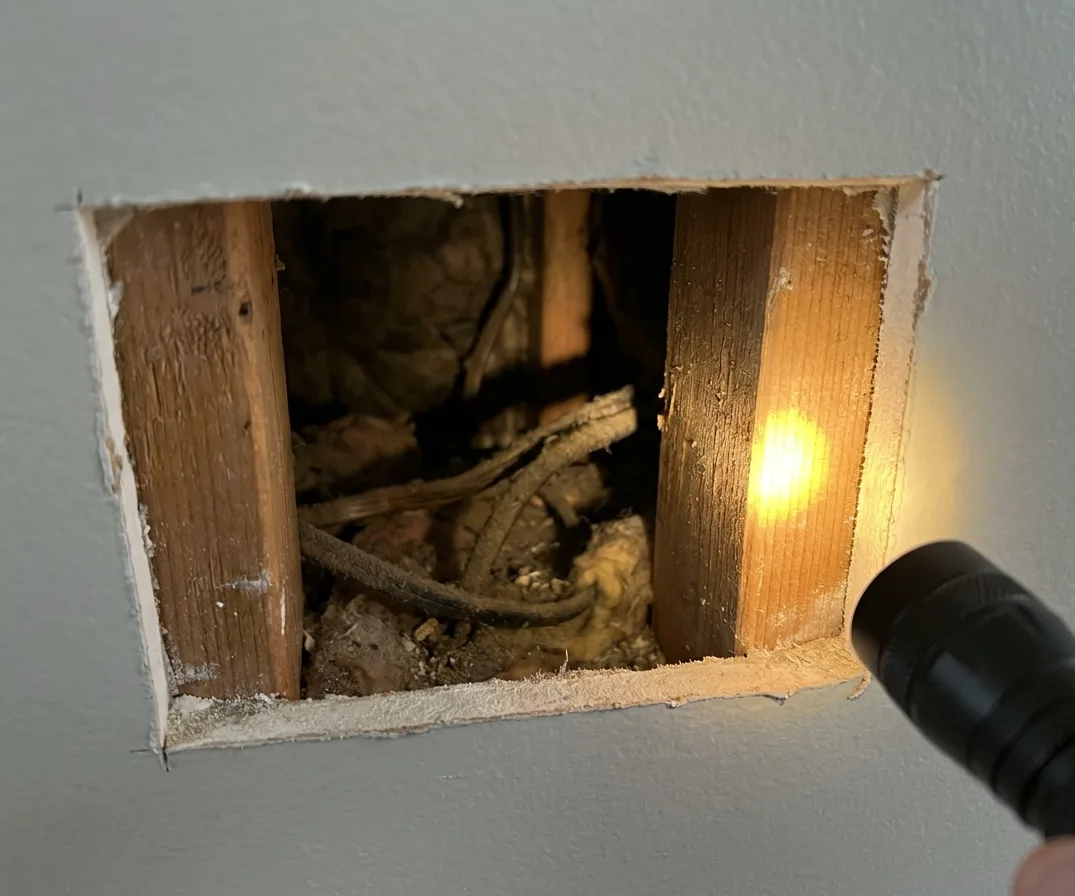
Something Has Died in the Wall
This is the call we treat most urgently, and it is almost always the consequence of rodenticide laid indoors — by a previous company, by a previous owner, or by somebody following advice from a hardware shop.
Bait does not kill at the station. The animal dies a day or more later, wherever it happens to be, and for a roof rat or a mouse that means a wall cavity, a roof void or the space under a floor. In a Las Vegas summer the result becomes severe within a few days: the odour permeates a house, and a fly population follows.
Locating it means working from the smell, from where fly activity is concentrated, and from what we know about the structure and where the runs were, narrowing it to a section and then opening a small area to remove it. It is not elegant work. It is considerably better than waiting several weeks for it to resolve itself, which is the alternative people are usually weighing when they call.
If you have laid bait, tell us on the phone. It is the single most useful thing you can say and there is nothing to be embarrassed about — it is sold for exactly this purpose and the failure mode is not obvious until it happens.
A Food Business That Has Had to Stop
A restaurant, cafe or food storage operation that has closed, or been told it will close, is losing money by the hour and the priority order is different from a domestic job.
First, the immediate evidence and any animals are dealt with. Second, everything found and everything done is documented in a form an inspector will accept — this matters as much as the physical work, because reopening usually depends on demonstrating a competent response rather than on the absence of rodents alone. Third, the entry route is identified, so there is a credible answer to how it happened rather than a shrug.
What we will not do is tell you a building can be fully sealed in an afternoon. It cannot. The full exclusion is a scheduled return, and being straight about that on the phone is more useful than an assurance that falls apart on site.
What One Visit Can and Cannot Do
It is worth being explicit, because "emergency rodent removal" is sold in a way that implies more than it delivers.
On a first urgent visit we can remove or contain the immediate animal, locate and remove a carcass, set trapping on the runs so the situation does not deteriorate overnight, close off a specific route where there is one obvious opening, and assess the extent of the problem so you know what you are actually dealing with.
What cannot be done in one visit is sealing a whole building or clearing an established population. Exclusion is a survey and then a day's work in metal. Clearing a colony is a trap line read over one to three weeks. Anyone promising both this afternoon is describing something that does not happen, and the practical result is that you pay an emergency rate for a partial job and are told afterwards that more is needed.
Pricing
Attendance is charged as attendance. There is no premium for the fact that you rang us upset, and no surcharge attached to the word emergency.
We mention it because it is a common practice and worth knowing about. A company that prices urgency separately has an incentive to treat more things as urgent, and you can see how that goes.
While You Wait
A few things genuinely help and one thing genuinely does not.
- Contain the animal to one room if it is indoors, and stop trying to catch it
- Put food, including pet food, into hard containers, and clear anything left out
- If you want to set traps, place them flush against walls rather than out in open floor
- Note when and where you hear activity — it is useful evidence and it costs nothing to write down
- Do not lay bait, particularly indoors. It will not help today and it is the direct cause of the calls in the previous section
Outside the Building
Dead rodents in a pool enclosure, a plant room or a garden shed are a common summer call, and worth attending rather than simply bagging.
The animal itself is a small problem. What it usually indicates is not: a carcass in pool equipment or a plant room generally means there is an active population using that structure as harbourage, and there is a reason it was in there. Having someone identify the species and find the route is the difference between clearing up an incident and noticing an infestation early.
After the Urgent Visit
An emergency call resolves a situation. It does not usually resolve the cause, and we will set out plainly what the real job is before we leave — what was found, what it means, what the actual scope of work is and what it will cost.
You are under no obligation to book it with us. But you will know what you are dealing with, which is more than most people have at the point they make an urgent call.
★ FAQ
Frequently Asked Questions
Shut the door on it and contain it in that one room, close off anything it could get into behind furniture if you safely can, and ring us. Do not chase it -- a cornered rodent moves unpredictably and you are far more likely to lose track of where it went. If it is confined to one room when we arrive, this is usually a short job. If it has had the run of the house it takes longer, which is the whole reason for shutting the door first.
That is one of the calls we treat as urgent, and it is nearly always the consequence of bait laid indoors. Locating a carcass in a cavity means working from the smell, the fly activity and the structure to narrow it to a section, and then opening up a small area to remove it. We would rather do that promptly than have you live with it, and in a Las Vegas summer it does not improve with waiting.
Same day wherever we can, and we will tell you honestly on the phone if we cannot. For a food business the priority order is usually: get the immediate evidence and any animals dealt with, document what was found and done in a form an inspector will accept, and identify the entry route so there is a credible answer to how it happened. The full exclusion work is normally a scheduled return, and saying that plainly is better than pretending a building can be sealed in an afternoon.
Remove or contain the immediate animal. Locate and remove a carcass. Set trapping on the runs so the situation stops getting worse overnight. Close off the specific route being used, where that is a single obvious opening. Assess the extent of the problem and tell you what the real job is. What we cannot do in one visit is seal a whole building or clear an established population, and we will not claim otherwise to get the booking.
No. Attendance is attendance. We are not going to charge a premium because somebody rang us frightened, and a company that does is telling you something about how it operates.
You can, and place them against the walls rather than out in the open. Do not put down bait, particularly indoors -- it will not help today, and it is the direct cause of the dead-animal-in-a-wall calls we attend. If you have already put bait down, tell us when we arrive rather than after we have started looking.
Yes. It is a common call in summer, and it is worth having someone check what the animal was and where it came from, because a dead rodent in a pool enclosure or a plant room quite often means an active population using the same route.
📍 On the map
How an Urgent Call Runs
Contain it, resolve it, stabilise it, then plan the real job
The phone call matters: containment advice and knowing whether bait has been laid changes what we do on arrival. On site the immediate problem is dealt with -- the animal removed, or the carcass located and taken out -- and trapping goes down so the position does not worsen overnight. The specific route in use gets closed where there is one. Then we set out plainly what the actual job is, on a scheduled return.