
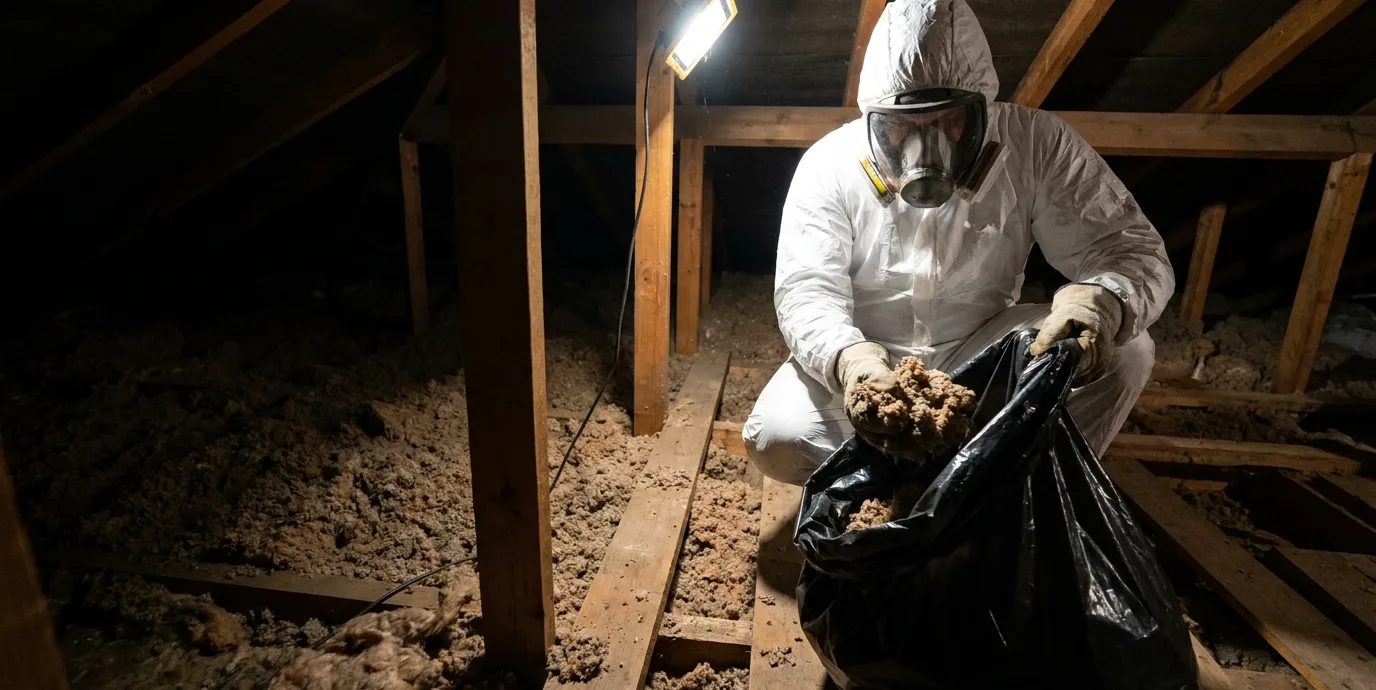
Attic Rodent Cleanup in Las Vegas, NV
Droppings, soiled insulation and nesting material removed, and the void decontaminated and deodorised
- Rodent control
- Straightforward pricing
- Local technicians
Get a price for your property
- Fast, courteous service
- Clear, upfront pricing
A Las Vegas technician is on the line now.




The Part Left Behind
Removing the animals does not remove what they left. Contamination stays in the void and keeps working on you.
Insulation Out, Not Sprayed Over
Soiled material comes out and is replaced. Treating the surface of contaminated insulation is a cosmetic answer.
Scent Is an Advertisement
Rodent scent marks tell the next animal along that this was a good place to live. Deodorising is part of the work.
Attic Rodent Cleanup in Las Vegas
Getting the animals out is the part everyone thinks about. What they left behind is the part that keeps affecting the building afterwards, and it is routinely skipped — either because the company was not asked to look, or because cleaning a roof void is hot, awkward work that is easier to leave out of a quote.
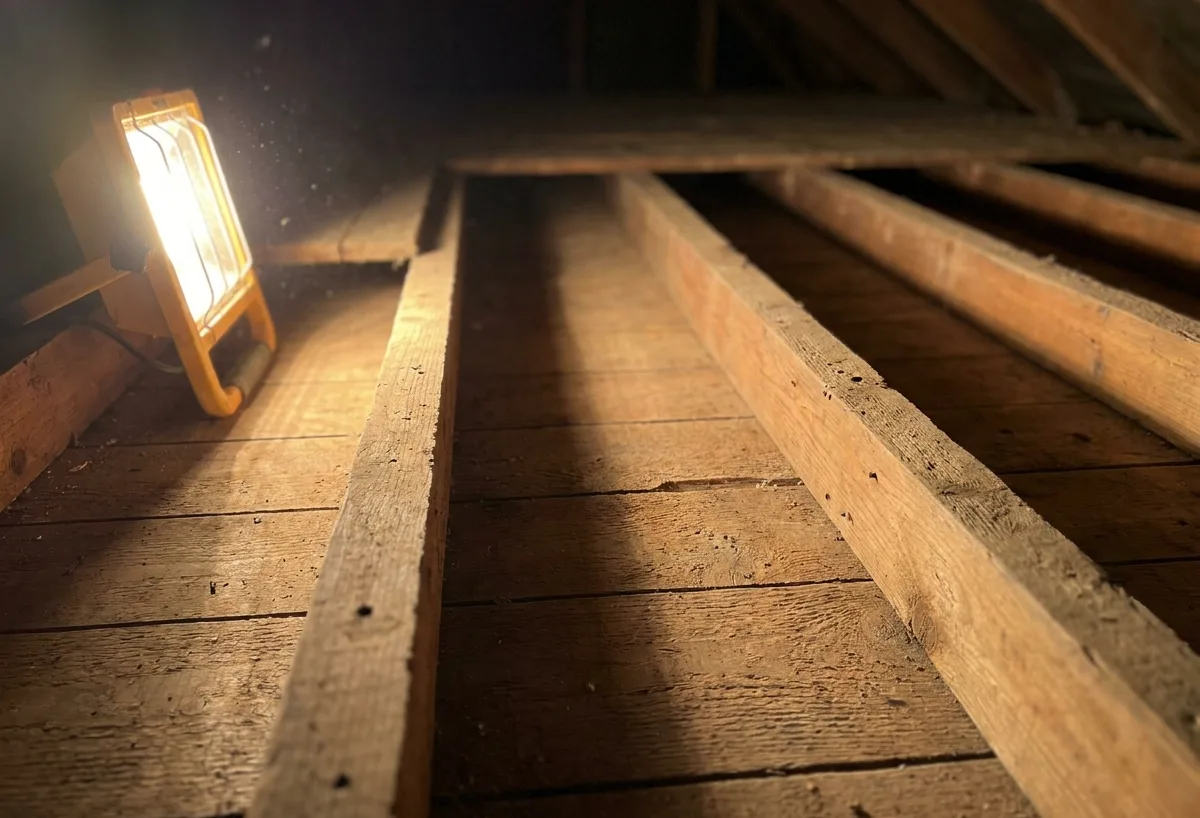
A void that has held a rodent population through a season contains urine-saturated insulation, accumulated droppings, shredded nesting material, gnawed cable and heavy scent marking. None of that leaves with the last trapped rat.
How Bad Is It, Actually
This varies enormously and we will tell you which case you are in rather than quoting every job the same way.
A single animal that got in a few weeks ago leaves scattered droppings along one run. That is an hour's clearance and it does not need a programme of work. At the other end, a colony that has been established since before the weather turned leaves contamination through the depth of the insulation across a substantial area, and that is a genuine day's work with materials to replace.
Quoting the first as though it were the second is exactly the kind of thing that gives this trade its reputation, and we would rather be the company that tells you your attic needs sweeping out.
Why It Matters Beyond Being Unpleasant
What the Material Carries
Rodent droppings and urine carry organisms that are worth taking seriously, salmonella among them, and some wild rodent species carry hantavirus. The exposure route that concerns us most is airborne rather than contact: dried droppings crumble readily, and disturbing them dry puts that material into the air.
This is the specific reason we discourage people from dealing with a heavily contaminated void themselves with a shop vacuum and a dust mask. A domestic vacuum without proper filtration takes fine material in and blows it straight back out into the space, which is worse than leaving it alone. If you are going to clear light contamination yourself, dampen it first — the point is to stop it becoming airborne.
What It Costs You in Insulation
Blown insulation works by trapping air in depth, and rodent activity ruins that in two ways at once. Runs compress it flat, which permanently removes the loft that does the insulating. And urine soaks in rather than sitting on the surface, so the contamination is inside the material.
That second point is the answer to the most common question about this work. There is nothing to clean. You cannot wash the inside of blown insulation, and treating the top of it addresses the smell for a few weeks and none of the substance. In the areas that were used, it comes out and is replaced.
The Smell, and Why Masking Fails
Odour treatments applied over contaminated material work for a short period and then the smell returns, which is why people conclude nothing works on rodent odour. Nothing works because the source is still in the building. Remove the soiled insulation and the nesting material, clean and treat the surfaces underneath, and the smell goes for the straightforward reason that the thing producing it has left.
Scent as an Invitation
This is the part most people have not considered. Rodents scent-mark heavily with urine, and those marks stay legible to other rodents long after the animals themselves are gone.
To the next roof rat travelling the top of the block wall, a void that still smells of an established population is not neutral — it reads as somewhere that has already been tested and found suitable. Deodorising is therefore not only about your comfort. It removes a standing advertisement, and it is one of the reasons a cleaned void stays empty longer than a merely emptied one. Rodent Control Las Vegas quotes the clearance and the decontamination as one job, so the second half is not a surprise.
The Wiring
We look for gnawed cable on every job of this kind and photograph what we find. Rodent incisors grow continuously and have to be worn down; cable sheathing is a convenient material for it, and in a roof void the cable is accessible and undisturbed.
Where sheathing is breached and conductor insulation is damaged, that is a fire risk and it needs a licensed electrician promptly. Our advice on this does not vary and we do not soften it. Repairing it is not our trade and we will not pretend it is — but we will show you the photograph, tell you where in the void it is, and say plainly that it should not wait.
The Order of Work
Cleaning comes last, and the sequence is not flexible.
Removal first, so there is nothing living in the void. Exclusion second, so it is closed. Only then cleaning, because cleaning a void that is still in use is work you will pay for twice, and because a void that is cleaned but still open simply gets recontaminated by the next animal in.
If a company offers to clean an attic before the exclusion is done, that is worth questioning.
How the Work Runs
The working area gets contained first, so material does not migrate down through the hatch into the living space — which is the failure mode that turns an attic job into a house-cleaning job.
Bulk removal comes next: nesting material, droppings and soiled insulation taken out under controlled conditions rather than swept. Then the surfaces underneath — joists, decking, the tops of ceiling boards, ducting — are cleaned down properly. Ducting deserves specific mention because flexible ducting is frequently torn open and used as a run, and a rodent route through the air-conditioning system is not something to clean around.
The void is then disinfected and deodorised, and insulation is replaced to the correct depth across the areas that were stripped. Replacing it to depth matters: leaving a stripped area thin to save on material undoes part of the reason for doing the work.
Summer Scheduling
A Las Vegas roof void in the middle of a July afternoon is not a place anyone can work carefully. We schedule this work for early morning in the hot months. It takes more planning and it is the difference between a job done properly and a job done quickly, and the whole value of this particular work is thoroughness.
Documentation and Insurance
You get photographs and a written record of what was found, what was removed, what was replaced and anything referred on to another trade.
That is worth having for its own sake, and it is also what an insurer will ask for. Policies vary a great deal and many exclude damage caused by vermin outright, but some cover consequential damage — an electrical fault, for instance. It is worth asking your insurer rather than assuming either way, and being able to hand over a dated set of photographs and a written scope makes that conversation considerably shorter.
★ FAQ
Frequently Asked Questions
It depends on how long the population was there, and we will tell you which case you are in. A single animal that got in last month leaves droppings that can be cleared in an hour. A colony that has been in a roof void for a season leaves urine-saturated insulation, accumulated droppings, nesting material and a smell that will not go on its own. Those are genuinely different jobs and we do not quote the first as the second.
Rodent droppings and urine carry organisms that matter, including salmonella and, from some wild rodent species, hantavirus. The exposure route that concerns us most is airborne: dried droppings crumble, and sweeping or vacuuming them dry puts that material into the air you then breathe. That is also why we would rather you did not tackle a heavily contaminated void yourself with a shop vacuum and a dust mask.
Because it absorbs. Blown insulation takes up urine through its depth rather than holding it on the surface, so there is nothing to clean -- the contamination is inside the material. It has also been compressed flat along every run, which has already cost you a good part of its thermal value. Removing and replacing the affected areas restores the insulation and takes the contamination out of the building in one operation.
Yes, when the source is actually removed. Odour treatments applied over contaminated material mask it for a few weeks and then it returns, which is why people conclude that nothing works. Take out the soiled insulation and the nesting material, treat the surfaces underneath, and the smell goes because the thing producing it is no longer in the building.
Rodents scent-mark heavily with urine, and those marks are legible to other rodents for a long time. A void that still smells of an established population reads, to the next animal travelling the block wall, as somewhere that has already been tested and found good. Deodorising is not about your comfort alone -- it removes a signal that actively invites reinfestation.
We look for it on every job and photograph what we find. Gnawed cable sheathing is common in a void that has held rodents, and where the insulation on a conductor is breached it is a fire risk. Our advice does not vary: get a licensed electrician to it promptly. Repairing it is not our trade and we will not pretend otherwise.
Sometimes, and it is worth asking. Policies vary considerably and many exclude damage from vermin, but some cover consequential damage such as an electrical fault. The photographs and the written record we produce are what an insurer will want, which is one of the practical reasons we document the work in the first place.
📍 On the map
How We Clean a Contaminated Void
Empty it, contain it, strip it, then treat what is underneath
Removal and sealing come first, so we are cleaning a void that is empty and closed rather than one still in use. The working area is contained so nothing migrates into the living space. Nesting material, droppings and soiled insulation come out under controlled conditions, surfaces and timbers are cleaned down and treated, the void is deodorised to remove the scent marking, and insulation is replaced to the correct depth.