
Rodent Trapping and Removal in Las Vegas, NV
Trap lines set on the runs the animals actually use, checked on a schedule and adjusted until the catch stops
- Rodent control
- Straightforward pricing
- Local technicians
Get a price for your property
- Fast, courteous service
- Clear, upfront pricing
A Las Vegas technician is on the line now.





Placement Beats Product
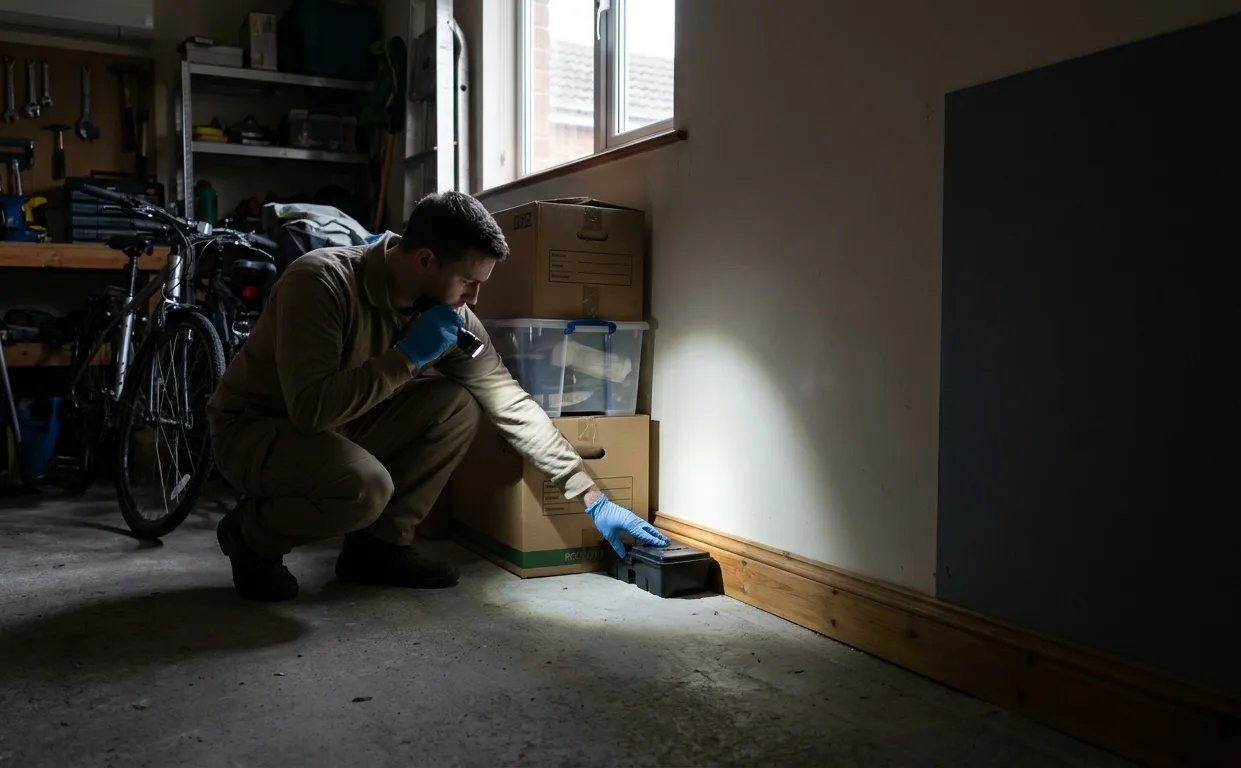
The trap matters far less than where it sits. We read the runs first and set on them, against the timber and the wall.
Checked, Not Left
An untended trap line is a smell and a fly problem, and it stops telling anyone anything. Ours are read on a schedule.
Removed From the Building
Caught animals leave with us. Nothing gets buried in a bin for you to deal with in August.
Rodent Trapping and Removal in Las Vegas
Trapping looks like the simplest part of this work and is the part most often got wrong. The equipment is cheap and available to anybody, which leads people to conclude that a failed attempt means an unusually clever rodent. It almost never does. It means the traps were in the wrong place, or there were not enough of them, or they were set fresh for an animal that avoids anything new for a week.
What we are selling here is not a better trap. It is knowing where to put it.
Rodents Travel Along Things
The single most useful fact about rodent behaviour is that they do not cross open ground if they can avoid it. They move with a flank in contact with something solid — the base of a wall, a beam, a joist, the top of a block wall, the edge of a kitchen unit. It is called thigmotaxis, and it is why the whole territory of a rodent problem is a network of edges rather than an area.
A trap in the middle of a garage floor is therefore not in a bad position; it is outside the territory altogether. The same trap placed flush against the wall, on the line the droppings describe, frequently works the first night. Nothing else in trapping matters as much as this.
Reading the Runs
Before anything is set, we work out where the animals actually go. Four things tell us.
Droppings
Where they concentrate is where animals spend time, which points towards harbourage rather than merely confirming presence. Scattered droppings along a beam are a route; a heavy accumulation in one corner is close to a nest.
Rub Marks
Dark greasy smears where fur has passed the same edge repeatedly. These take time to build, so they mark established routes rather than occasional wandering, and they are the most reliable thing to set against.
Gnawing
Fresh gnawing shows pale against weathered timber. It marks where an animal is working at something — a gap it is enlarging, a cable, a stored box — and those points are worth a trap.
Tracks
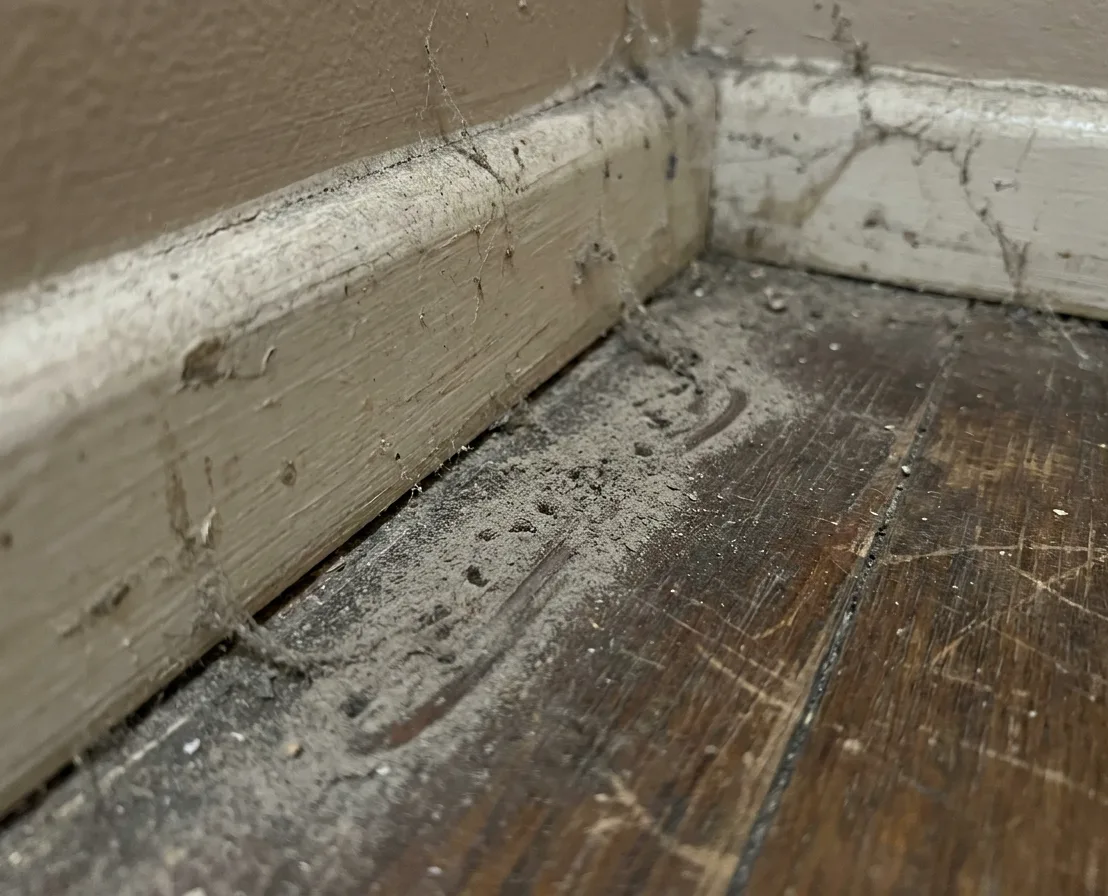
In dust on a garage floor, on rafters, in the fine grit that settles in a roof void. Where the picture is unclear we will put down tracking material deliberately and come back to read it, which is quicker than guessing and considerably quicker than being wrong.
Rats and Mice Are Trapped Differently
Rats Are Wary
Rats are neophobic: genuinely suspicious of new objects in a familiar environment. Put a fresh trap on a perfect run and a rat will detour around it for several days. The way through this is pre-baiting — placing traps unset, baited, and leaving them until they have stopped being novel and the animals are feeding from them confidently. Then they get armed, and the catch comes quickly.
This costs a few days at the start and saves weeks overall. It is also the step homeowners almost never take, which is why the common experience is a week of untouched traps followed by the conclusion that the traps do not work.
Mice Are Curious
Mice are the opposite. They will investigate something new within hours, so pre-baiting is largely pointless. What matters instead is quantity and spacing, because a mouse ranges only a few metres from its nest. A dozen traps in a house is not a serious attempt at a mouse population; the placement has to be dense along the walls and behind the units in the specific areas that are active.
On Live Traps
We use them rarely, and we would rather explain why than simply decline.
A live-caught rat or mouse has to be taken somewhere. Nevada regulates what may be relocated, and commensal rodents — the ones that live with people — are not straightforwardly released into the desert. An animal put down in unfamiliar territory without an established nest, water source or knowledge of the local predators generally dies anyway, more slowly. Released nearby, it comes back to the building it knows, or becomes a neighbour's problem.
So the humane framing does not survive contact with what actually happens to the animal. Where there is a real reason for live capture we will discuss it properly. What we will not do is sell it as the kind option when it is not.
On Glue Boards
We use them for monitoring, in specific positions where a snap trap cannot safely be placed, and not as a primary method. They catch slowly. They catch things that were never the target — lizards, and geckos in particular. And an animal caught alive on a board is not something we are willing to leave for a customer to find. That is the whole of their role here.
Working the Line
A trap line is a thing that gets read, not a thing that gets installed. We check every few days at the start and space visits out as the pattern settles.
What the catch tells us matters more than the number. If traps in one corner of a garage keep producing while everything else has gone quiet, there is harbourage we have not found and an opening we have not closed in that direction — which is actionable, and invisible to anyone not tracking it. If the whole line goes quiet at once, that is a different signal.
Left-down traps stop being useful. A sprung trap holds nothing new, a caught animal left for a fortnight in this climate is a smell and a fly problem, and an unread line stops generating information. This is the practical difference between a trapping programme and a box of traps. Reading a trap line properly is most of what Rodent Control Las Vegas is actually being paid for.
What Happens to What We Catch
Caught animals leave with us and are disposed of properly. We do not bag carcasses into your own bin — in a Las Vegas summer that is an unpleasant thing to hand somebody — and we do not leave sprung traps in place for the next visit to deal with.
Knowing When to Stop
Three things have to be true together before we call a job finished, and this is where most self-directed efforts end prematurely.
The catch has stopped, not slowed. A slowing catch can equally mean the remaining animals have learned the line. No fresh droppings are appearing in the areas that were active, which is checked rather than assumed. And the exclusion work has been done and inspected, because a cleared building that is still open is a building waiting to be refilled.
If those three are not all true, the job is not over, and saying otherwise just moves the next call a few months down the road.
★ FAQ
Frequently Asked Questions
Nearly always placement. Rodents run fixed routes with their flank against something solid -- a wall, a beam, a joist -- and they will not cross open floor to investigate. A trap in the middle of a garage or the centre of a kitchen sits outside the territory entirely. Set the same trap flush against the wall on the run the droppings describe and it often works the first night. The other common reason is quantity: mice range only a few metres, so a handful of traps across a whole house covers almost none of the population's ground.
It matters a great deal with rats and hardly at all with mice. Rats are genuinely wary of anything new in a familiar space and will avoid a fresh trap for days. The way round it is to place traps unset for a period so they stop being novel, then set them -- which costs a few days and saves weeks. Mice are the opposite: curious, and quite willing to investigate something new immediately, which is why a mouse job is about numbers and position rather than patience.
Rarely, and we will explain why rather than just declining. A live-caught commensal rodent has to go somewhere, and Nevada regulates what may be relocated. Released animals in unfamiliar territory generally do badly, and releasing them nearby simply returns them to your building or gives them to a neighbour. Where there is a genuine reason for live capture we will discuss it properly, but we would rather be honest than sell a humane story that does not survive contact with what actually happens.
We use them for monitoring in specific places and not as a primary method. They catch slowly, they catch things that were never the target, and an animal left alive on a board is not something we want to leave for a customer to find. Where a snap trap cannot safely be placed they have a narrow role. That is the extent of it.
Typically every few days at the start, then spacing out as the catch pattern settles. The frequency is driven by what the traps are telling us rather than by a fixed schedule -- a line still producing in one corner means there is a nest we have not reached and placement needs adjusting, which is only visible if somebody is actually reading it.
Three things together, not one. The catch has stopped. No fresh droppings are appearing in the areas that were active. And the exclusion has been checked. A slowing catch on its own means very little -- it can equally mean the remaining animals have learned the trap line.
It leaves with us and is disposed of properly. We do not bag carcasses into a customer's own bin, which in this climate is an unpleasant thing to hand somebody, and we do not leave sprung traps in place for the next visit to deal with.
📍 On the map
How We Run a Trap Line in Las Vegas
Read the runs, set on them, then keep reading the catch
Droppings, rub marks and tracks establish the circuit the animals are running, and traps go on it -- against the timber, in the roof void, behind the appliances. Rat work gets a pre-baiting period so neophobia does not cost weeks. Lines are then checked on a schedule and repositioned as the catch pattern shows where the nests actually are, and everything caught leaves with us.