
Flea Control in Las Vegas, NV
Request your free inspection and customized flea treatment plan today.
- Ants & rodents
- Straightforward pricing
- Local technicians
Call for a rate estimate
- Fast, courteous service
- Clear, upfront pricing
Our local team is taking calls now.





Same-Day Availability
Fleas multiply rapidly in Las Vegas homes. We offer quick response times to stop infestations before they spread throughout your property.
Comprehensive Treatment Plans
Our flea control specialists address all life stages—eggs, larvae, pupae, and adults—ensuring complete elimination from your home.
Pet-Safe Solutions
We use proven flea treatments that protect your family and pets while eliminating infestations effectively throughout your Las Vegas property.
Flea Control in Las Vegas
Fleas need humidity to complete their life cycle, which ought to make the Mojave hostile to them. In practice they concentrate wherever we create the conditions ourselves: irrigated grass, a shaded side yard that never dries out, the cool patch of soil a dog digs out under a porch, a kennel run, a garage that gets hosed down. A Las Vegas flea problem is almost always a moisture-and-shade problem in a small part of the property rather than a whole-yard problem, and treating it that way is faster and uses far less product.
Why Treating the Pet Never Finishes the Job
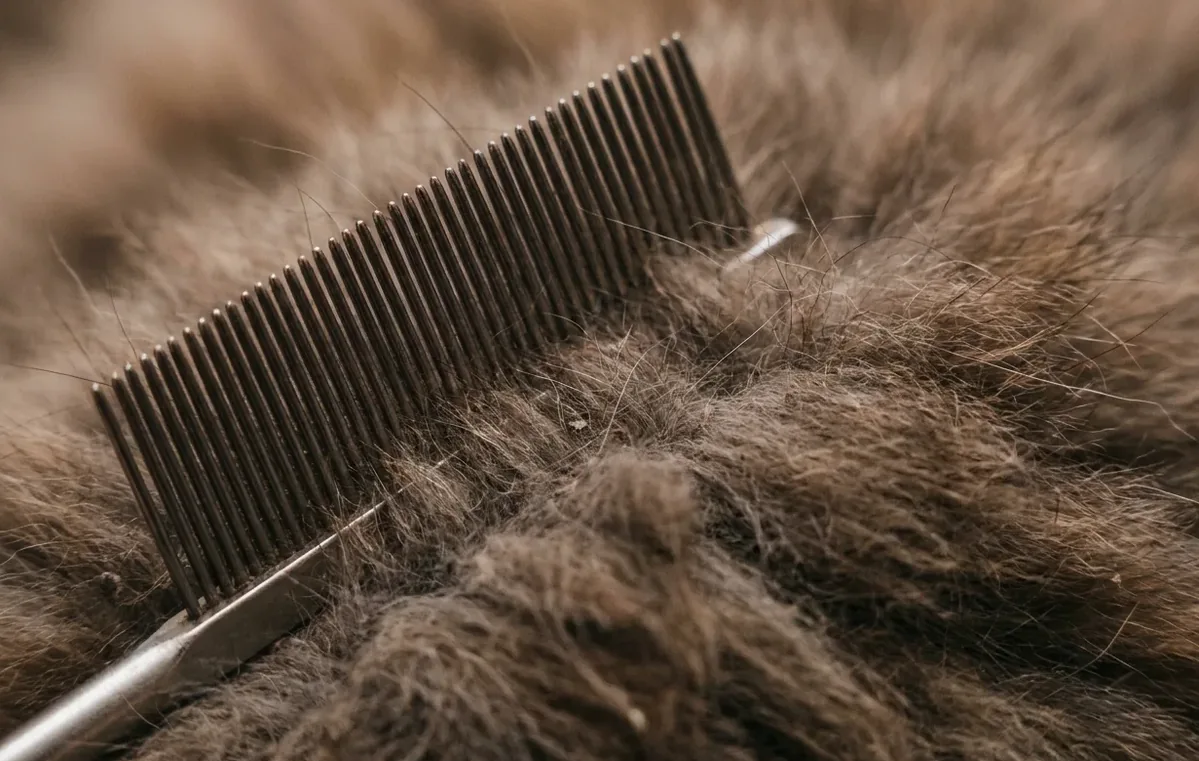
The adult fleas on an animal are a small minority of the population. The great majority of it is eggs, larvae and pupae sitting in carpet fibre, in bedding, in the gaps between floorboards, and in shaded soil outside. Eggs are laid on the animal and fall off wherever it goes, which means the distribution of the problem is a map of where the pet sleeps and walks.
The pupal stage is what makes fleas frustrating. Sealed inside its cocoon, a pupa shrugs off insecticide almost entirely and will sit there for weeks. What brings it out is the signature of a passing animal: movement through the floor, body heat, exhaled breath. This is why a house that seemed clear produces a wave of fleas after a weekend away, and why any treatment programme that claims to finish in one visit is overselling.
Our Flea Control Process
Inspection
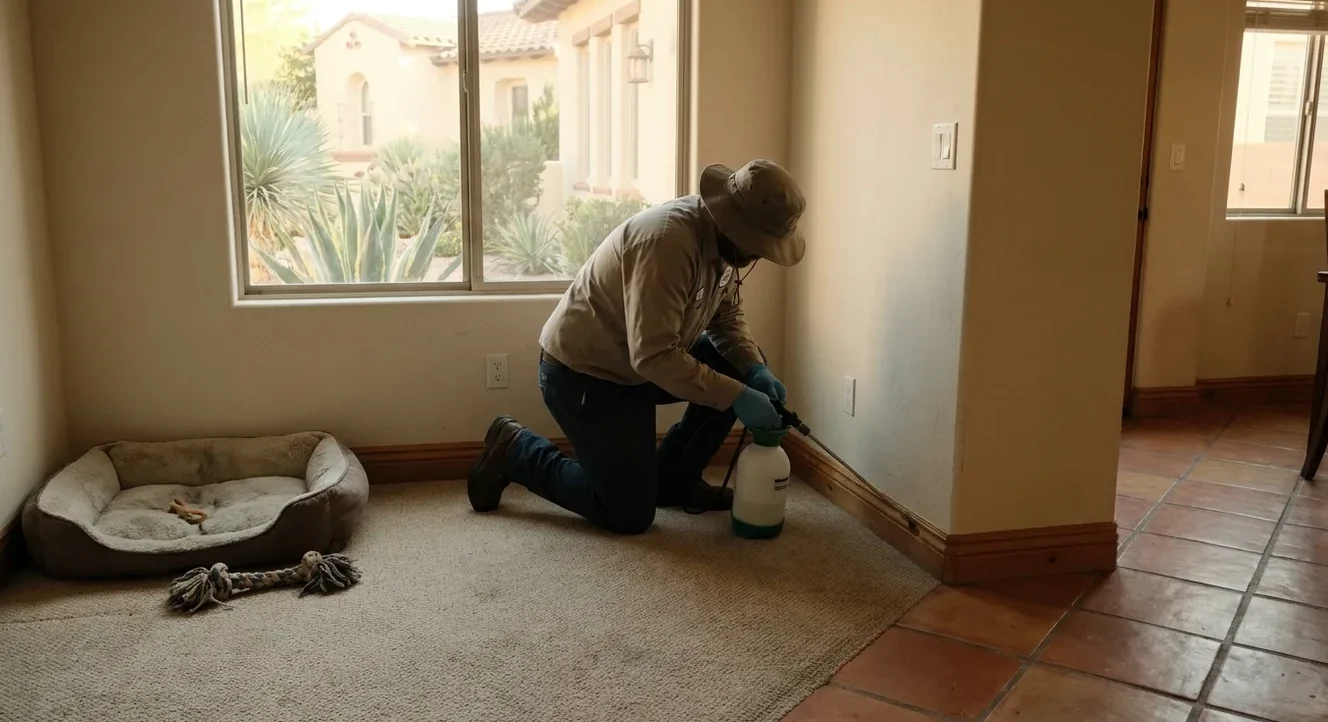
We start by establishing the pet's routine — where it sleeps, where it lies down outside, which route it takes between the two. The population maps onto that almost exactly. Indoors that means bedding, the carpet along skirting, under furniture and the base of upholstery. Outdoors it means shade and moisture: under the porch, along the north side of the house, in the shrub bed the dog lies in, and around any kennel or run.
Indoor Treatment
Residual Application
Applied to the flooring, skirting junctions and the areas around pet resting places rather than broadcast across every room.
Insect Growth Regulator
This is the part that ends the cycle. An IGR stops eggs and larvae developing into biting adults, which means the emerging pupae we cannot kill never become a second generation. Without it, treatment is a repeated cull rather than a fix.
Outdoor Treatment
Targeted at the shaded, damp harbourage rather than the whole yard. Fleas do not survive in open, sun-baked gravel, so treating it is wasted product. The under-porch void, the shrub beds, the side return and the kennel area are the job.
Coordinating With Your Vet
We treat the environment; your vet treats the animal. Both have to happen in the same window or the untreated half keeps reseeding the treated half. We are happy to time our visits around a treatment your vet has scheduled.
Follow-Up
A second visit timed to the emergence of the pupae that were protected during the first. This is not an upsell — it is how the pupal stage is dealt with.
What You Need to Do Before and After
Vacuum thoroughly before we arrive and then daily for a fortnight afterwards, emptying the canister or bagging the contents outside each time. Vacuuming does two useful things: it removes eggs and larvae outright, and the vibration triggers pupae to emerge into a treated environment where they can be killed. Wash all pet bedding hot. Keep pets and people off treated surfaces until they are dry. Getting the vacuuming done properly makes a bigger difference to the outcome than anything else you can do.
Signs You Have Fleas
A Pet Scratching Persistently
Especially at the base of the tail and along the hindquarters, which is where fleas concentrate.
Flea Dirt
Black specks in the coat or on bedding that turn rust-red on a damp tissue — digested blood, and the most reliable confirmation there is.
Bites Around the Ankles
Small itchy bites clustered on the lower legs, from larvae developing in the flooring.
Fleas on Light Flooring
Small dark insects that jump when disturbed, most visible on light carpet or tile.
A Sudden Wave After Time Away
An empty house lets pupae accumulate; the vibration of your return triggers a mass emergence. It is a classic pattern and it does not mean the previous treatment failed.
Keeping Them Out Afterwards
Keep the pet on a year-round preventative from your vet — Las Vegas does not get a winter cold enough to break the cycle for you. Cut back the shrubs the animal lies under so the soil dries. Fix the irrigation leak that keeps the side yard damp. Wash bedding regularly. And if wildlife is getting under a porch or into a crawl space, deal with that, because a flea population will happily live on a resident animal and treat your pet as a bonus.
★ FAQ
Frequently Asked Questions
Fleas reproduce extremely rapidly in Las Vegas's warm climate. A single female flea can lay up to 50 eggs daily, which fall into carpets and furniture where they develop through larval and pupal stages. Within 2-3 weeks under ideal conditions, a small flea population can explode into a major infestation affecting multiple rooms. This rapid reproduction makes professional treatment essential—waiting even a few weeks allows populations to multiply exponentially throughout your home.
Flea pupae develop inside protective cocoons that resist pesticides and can remain dormant for months. After initial treatment eliminates adult fleas, eggs, and larvae, these pupae continue developing and emerge as new adults over the following weeks. This is normal and expected—our treatment includes follow-up service to address these emerging adults before they reproduce. Continued vacuuming helps stimulate pupae emergence during this period, allowing treatments to eliminate them more quickly.
Yes. Fleas can be introduced by previous residents, visiting pets, wildlife like rodents and rabbits in your yard, or even on used furniture and carpets. In Las Vegas, outdoor cats and desert wildlife often carry fleas that can migrate into homes. Once inside, fleas will bite humans in the absence of pets. Professional flea control eliminates these populations regardless of their source and implements prevention measures to keep them from returning.
Vacuum all carpeted areas, upholstered furniture, and baseboards thoroughly before treatment, then discard the vacuum bag or empty the canister outside. Wash all pet bedding in hot water. Remove pets, their food bowls, and toys during treatment. Plan to stay off treated carpets for 2-4 hours until dry. Continue daily vacuuming for two weeks after treatment to remove flea eggs and stimulate pupae emergence. We'll provide complete preparation instructions when scheduling your service to ensure maximum treatment effectiveness.
📍 On the map
Our Complete Flea Elimination Process
Thorough treatment protocol ensures lasting flea control
Our proven flea control methodology addresses every stage of the flea life cycle while treating all affected areas of your Las Vegas home, ensuring complete elimination and preventing future infestations.